SOLDES
Jusqu'à -70% sur une sélection d'articles*

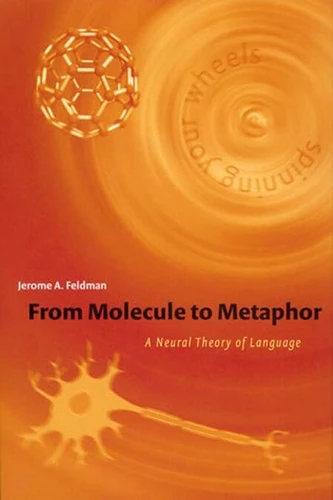
From Molecule to Metaphor. A Neural Theory of Language
Par :Formats :
Disponible dans votre compte client Decitre ou Furet du Nord dès validation de votre commande. Le format ePub protégé est :
- Compatible avec une lecture sur My Vivlio (smartphone, tablette, ordinateur)
- Compatible avec une lecture sur liseuses Vivlio
- Pour les liseuses autres que Vivlio, vous devez utiliser le logiciel Adobe Digital Edition. Non compatible avec la lecture sur les liseuses Kindle, Remarkable et Sony
- Non compatible avec un achat hors France métropolitaine
 , qui est-ce ?
Notre partenaire de plateforme de lecture numérique où vous retrouverez l'ensemble de vos ebooks gratuitement
Pour en savoir plus sur nos ebooks, consultez notre aide en ligne ici
C'est si simple ! Lisez votre ebook avec l'app Vivlio sur votre tablette, mobile ou ordinateur :

- Nombre de pages384
- FormatePub
- ISBN978-0-262-29688-5
- EAN9780262296885
- Date de parution25/01/2008
- Protection num.Adobe DRM
- Taille1 Mo
- Infos supplémentairesepub
- ÉditeurBradford Books
Résumé
In From Molecule to Metaphor, Jerome Feldman proposes a theory of language and thought that treats language not as an abstract symbol system but as a human biological ability that can be studied as a function of the brain, as vision and motor control are studied. This theory, he writes, is a "bridging theory" that works from extensive knowledge at two ends of a causal chain to explicate the links between.
Although the cognitive sciences are revealing much about how our brains produce language and thought, we do not yet know exactly how words are understood or have any methodology for finding out. Feldman develops his theory in computer simulations-formal models that suggest ways that language and thought may be realized in the brain. Combining key findings and theories from biology, computer science, linguistics, and psychology, Feldman synthesizes a theory by exhibiting programs that demonstrate the required behavior while remaining consistent with the findings from all disciplines.
After presenting the essential results on language, learning, neural computation, the biology of neurons and neural circuits, and the mind/brain, Feldman introduces specific demonstrations and formal models of such topics as how children learn their first words, words for abstract and metaphorical concepts, understanding stories, and grammar (including "hot-button" issues surrounding the innateness of human grammar).
With this accessible, comprehensive book Feldman offers readers who want to understand how our brains create thought and language a theory of language that is intuitively plausible and also consistent with existing scientific data at all levels.
Although the cognitive sciences are revealing much about how our brains produce language and thought, we do not yet know exactly how words are understood or have any methodology for finding out. Feldman develops his theory in computer simulations-formal models that suggest ways that language and thought may be realized in the brain. Combining key findings and theories from biology, computer science, linguistics, and psychology, Feldman synthesizes a theory by exhibiting programs that demonstrate the required behavior while remaining consistent with the findings from all disciplines.
After presenting the essential results on language, learning, neural computation, the biology of neurons and neural circuits, and the mind/brain, Feldman introduces specific demonstrations and formal models of such topics as how children learn their first words, words for abstract and metaphorical concepts, understanding stories, and grammar (including "hot-button" issues surrounding the innateness of human grammar).
With this accessible, comprehensive book Feldman offers readers who want to understand how our brains create thought and language a theory of language that is intuitively plausible and also consistent with existing scientific data at all levels.