
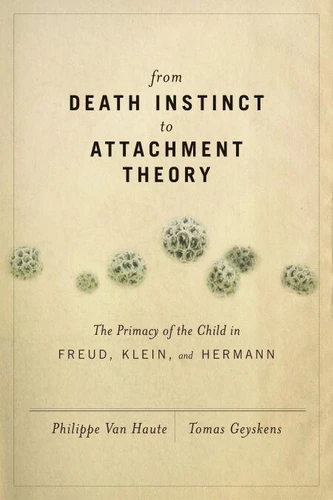
From Death Instinct to Attachment Theory
Par : ,Formats :
Disponible dans votre compte client Decitre ou Furet du Nord dès validation de votre commande. Le format ePub protégé est :
- Compatible avec une lecture sur My Vivlio (smartphone, tablette, ordinateur)
- Compatible avec une lecture sur liseuses Vivlio
- Pour les liseuses autres que Vivlio, vous devez utiliser le logiciel Adobe Digital Edition. Non compatible avec la lecture sur les liseuses Kindle, Remarkable et Sony
- Non compatible avec un achat hors France métropolitaine
 , qui est-ce ?
Notre partenaire de plateforme de lecture numérique où vous retrouverez l'ensemble de vos ebooks gratuitement
Pour en savoir plus sur nos ebooks, consultez notre aide en ligne ici
C'est si simple ! Lisez votre ebook avec l'app Vivlio sur votre tablette, mobile ou ordinateur :

- Nombre de pages160
- FormatePub
- ISBN978-1-63542-118-7
- EAN9781635421187
- Date de parution15/09/2020
- Protection num.Adobe DRM
- Taille2 Mo
- Infos supplémentairesepub
- ÉditeurOther Press Professional
Résumé
Two leading psychoanalysts resolve the conflict between attachment theory and trauma theory. In From Death Instinct to Attachment Theory, Tomas Geyskens and Philippe Van Haute address a theoretical conflict at the heart of contemporary psychoanalysis. Analytic theory, especially the work of Melanie Klein, asserts the developmental primacy of infantile Hilflosigkeit and the trauma it inevitably inflicts; however, John Bowlby and other attachment theorists have shown that attachment to the mother is primary and instinctiveand not the result of traumatic helplessness.
Geyskens and Van Haute resolve the apparent tension between the empirical fact of the primacy of attachment and the fundamental psychoanalytic theory of infantile trauma by drawing on Imre Hermanns distinction between natural development and subjective history. Arguing that Hermanns theory constitutes a workable clinical anthropology of attachment, they undertake a deep and revealing analysis of the work of Freud and Klein on the death instinct, trauma, and infantile sexuality; the critique leveled by attachment theorists like Bowlby; and the overlooked insights of the Hungarian School of Psychoanalysis.
From Death Instinct to Attachment Theory offers an elegant answer to an important problem in psychoanalysis and provides new insight into the sort of clinical phenomena that led Freud to move beyond the pleasure principle in the first place.
Geyskens and Van Haute resolve the apparent tension between the empirical fact of the primacy of attachment and the fundamental psychoanalytic theory of infantile trauma by drawing on Imre Hermanns distinction between natural development and subjective history. Arguing that Hermanns theory constitutes a workable clinical anthropology of attachment, they undertake a deep and revealing analysis of the work of Freud and Klein on the death instinct, trauma, and infantile sexuality; the critique leveled by attachment theorists like Bowlby; and the overlooked insights of the Hungarian School of Psychoanalysis.
From Death Instinct to Attachment Theory offers an elegant answer to an important problem in psychoanalysis and provides new insight into the sort of clinical phenomena that led Freud to move beyond the pleasure principle in the first place.