Nouveauté
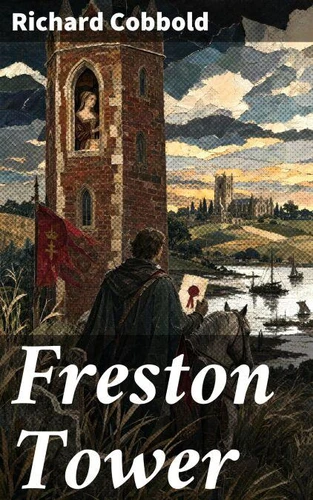
Freston Tower. Historical novels - A tale of the times of Cardinal Wolsey
Par :Formats :
Disponible dans votre compte client Decitre ou Furet du Nord dès validation de votre commande. Le format ePub est :
- Compatible avec une lecture sur My Vivlio (smartphone, tablette, ordinateur)
- Compatible avec une lecture sur liseuses Vivlio
- Pour les liseuses autres que Vivlio, vous devez utiliser le logiciel Adobe Digital Edition. Non compatible avec la lecture sur les liseuses Kindle, Remarkable et Sony
 , qui est-ce ?
Notre partenaire de plateforme de lecture numérique où vous retrouverez l'ensemble de vos ebooks gratuitement
Pour en savoir plus sur nos ebooks, consultez notre aide en ligne ici
C'est si simple ! Lisez votre ebook avec l'app Vivlio sur votre tablette, mobile ou ordinateur :

- Nombre de pages296
- FormatePub
- ISBN859-65--4791268-2
- EAN8596547912682
- Date de parution29/06/2026
- Protection num.Digital Watermarking
- Taille2 Mo
- Infos supplémentairesepub
- ÉditeurGOOD PRESS
Résumé
Richard Cobbold's Freston Tower: A Tale of the Times of Cardinal Wolsey is a historical romance set against the political and religious tensions of early Tudor England. Centered on the era of Wolsey's ascendancy, the novel combines antiquarian interest with dramatic plotting, using the East Anglian landmark of Freston Tower as both setting and symbol. Cobbold writes in the nineteenth-century historical mode shaped by Scott: picturesque description, chivalric sentiment, local legend, and careful evocation of period manners all contribute to a narrative that seeks to animate the Tudor past for a Victorian readership.
Cobbold, an English clergyman and novelist closely associated with Suffolk, drew deeply on regional history, architecture, and folklore in his fiction. His familiarity with the landscapes and traditions of East Anglia gave his historical writing unusual topographical vividness. That clerical and antiquarian background helps explain his attraction to the moral, political, and ecclesiastical complexities of Wolsey's age, a moment when questions of power, conscience, and national change could be explored through romance.
This book will particularly reward readers interested in Victorian historical fiction, Tudor England, and the literary reinvention of local history. It is recommended not only as an engaging narrative, but also as a revealing example of how nineteenth-century writers interpreted England's pre-Reformation past.
Cobbold, an English clergyman and novelist closely associated with Suffolk, drew deeply on regional history, architecture, and folklore in his fiction. His familiarity with the landscapes and traditions of East Anglia gave his historical writing unusual topographical vividness. That clerical and antiquarian background helps explain his attraction to the moral, political, and ecclesiastical complexities of Wolsey's age, a moment when questions of power, conscience, and national change could be explored through romance.
This book will particularly reward readers interested in Victorian historical fiction, Tudor England, and the literary reinvention of local history. It is recommended not only as an engaging narrative, but also as a revealing example of how nineteenth-century writers interpreted England's pre-Reformation past.