SOLDES
Jusqu'à -70% sur une sélection d'articles*

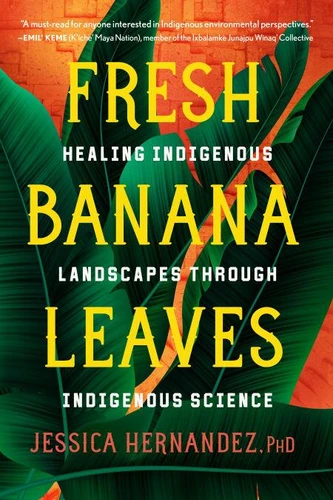
Fresh Banana Leaves. Healing Indigenous Landscapes through Indigenous Science
Par :Formats :
Disponible dans votre compte client Decitre ou Furet du Nord dès validation de votre commande. Le format ePub protégé est :
- Compatible avec une lecture sur My Vivlio (smartphone, tablette, ordinateur)
- Compatible avec une lecture sur liseuses Vivlio
- Pour les liseuses autres que Vivlio, vous devez utiliser le logiciel Adobe Digital Edition. Non compatible avec la lecture sur les liseuses Kindle, Remarkable et Sony
- Non compatible avec un achat hors France métropolitaine
 , qui est-ce ?
Notre partenaire de plateforme de lecture numérique où vous retrouverez l'ensemble de vos ebooks gratuitement
Pour en savoir plus sur nos ebooks, consultez notre aide en ligne ici
C'est si simple ! Lisez votre ebook avec l'app Vivlio sur votre tablette, mobile ou ordinateur :

- Nombre de pages256
- FormatePub
- ISBN978-1-62317-606-8
- EAN9781623176068
- Date de parution18/01/2022
- Protection num.Adobe DRM
- Taille10 Mo
- Infos supplémentairesepub
- ÉditeurNorth Atlantic Books
Résumé
A 2022 Los Angeles Times Book Prize Finalist in Science & TechnologyAn Indigenous environmental scientist breaks down why western conservationism isn't working--and offers Indigenous models informed by case studies, personal stories, and family histories that center the voices of Latin American women and land protectors. Despite the undeniable fact that Indigenous communities are among the most affected by climate devastation, Indigenous science is nowhere to be found in mainstream environmental policy or discourse.
And while holistic land, water, and forest management practices born from millennia of Indigenous knowledge systems have much to teach all of us, Indigenous science has long been ignored, otherized, or perceived as "soft"--the product of a systematic, centuries-long campaign of racism, colonialism, extractive capitalism, and delegitimization. Here, Jessica Hernandez--Maya Ch'orti' and Zapotec environmental scientist and founder of environmental agency Piña Soul--introduces and contextualizes Indigenous environmental knowledge and proposes a vision of land stewardship that heals rather than displaces, that generates rather than destroys.
She breaks down the failures of western-defined conservatism and shares alternatives, citing the restoration work of urban Indigenous people in Seattle; her family's fight against ecoterrorism in Latin America; and holistic land management approaches of Indigenous groups across the continent. Through case studies, historical overviews, and stories that center the voices and lived experiences of Indigenous Latin American women and land protectors, Hernandez makes the case that if we're to recover the health of our planet--for everyone--we need to stop the eco-colonialism ravaging Indigenous lands and restore our relationship with Earth to one of harmony and respect.
And while holistic land, water, and forest management practices born from millennia of Indigenous knowledge systems have much to teach all of us, Indigenous science has long been ignored, otherized, or perceived as "soft"--the product of a systematic, centuries-long campaign of racism, colonialism, extractive capitalism, and delegitimization. Here, Jessica Hernandez--Maya Ch'orti' and Zapotec environmental scientist and founder of environmental agency Piña Soul--introduces and contextualizes Indigenous environmental knowledge and proposes a vision of land stewardship that heals rather than displaces, that generates rather than destroys.
She breaks down the failures of western-defined conservatism and shares alternatives, citing the restoration work of urban Indigenous people in Seattle; her family's fight against ecoterrorism in Latin America; and holistic land management approaches of Indigenous groups across the continent. Through case studies, historical overviews, and stories that center the voices and lived experiences of Indigenous Latin American women and land protectors, Hernandez makes the case that if we're to recover the health of our planet--for everyone--we need to stop the eco-colonialism ravaging Indigenous lands and restore our relationship with Earth to one of harmony and respect.
A propos de Jessica Hernandez
The Whale Child
E-book
19,57 €