The French Resistance (French: La Résistance) was a collection of groups that fought the Nazi occupation and the collaborationist Vichy regime in France during the Second World War. Resistance cells were small groups of armed men and women (called the Maquis in rural areas) who conducted guerrilla warfare and published underground newspapers. They also provided first-hand intelligence information, and escape networks that helped Allied soldiers and airmen trapped behind Axis lines.
The Resistance's men and women came from many parts of French society, including émigrés, academics, students, aristocrats, conservative Roman Catholics (including clergy), Protestants, Jews, Muslims, liberals, anarchists, communists, and some fascists. The proportion of the French people who participated in organized resistance has been estimated at from one to three percent of the total population. The French Resistance played a significant role in facilitating the Allies' rapid advance through France following the invasion of Normandy on 6 June 1944.
Members provided military intelligence on German defences known as the Atlantic Wall, and on Wehrmacht deployments and orders of battle for the Allies' invasion of Provence on 15 August. The Resistance also planned, coordinated, and executed sabotage acts on electrical power grids, transport facilities, and telecommunications networks. The Resistance's work was politically and morally important to France during and after the German occupation.
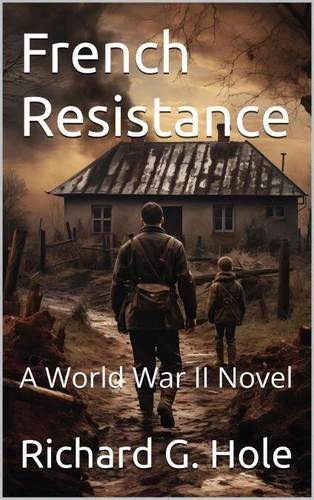
The actions of the Resistance contrasted with the collaborationism of the Vichy régime. After the Allied landings in Normandy and Provence, the paramilitary components of the Resistance formed a hierarchy of operational units known as the French Forces of the Interior (FFI) with around 100, 000 fighters in June 1944. By October 1944, the FFI had grown to 400, 000 members. Although the amalgamation of the FFI was sometimes fraught with political difficulties, it was ultimately successful and allowed France to rebuild the fourth-largest army in the European theatre (1.2 million men) by VE Day in May 1945.... French Resistance is a story belonging to the World War II collection, a series of war novels set in World War II.
The French Resistance (French: La Résistance) was a collection of groups that fought the Nazi occupation and the collaborationist Vichy regime in France during the Second World War. Resistance cells were small groups of armed men and women (called the Maquis in rural areas) who conducted guerrilla warfare and published underground newspapers. They also provided first-hand intelligence information, and escape networks that helped Allied soldiers and airmen trapped behind Axis lines.
The Resistance's men and women came from many parts of French society, including émigrés, academics, students, aristocrats, conservative Roman Catholics (including clergy), Protestants, Jews, Muslims, liberals, anarchists, communists, and some fascists. The proportion of the French people who participated in organized resistance has been estimated at from one to three percent of the total population. The French Resistance played a significant role in facilitating the Allies' rapid advance through France following the invasion of Normandy on 6 June 1944.
Members provided military intelligence on German defences known as the Atlantic Wall, and on Wehrmacht deployments and orders of battle for the Allies' invasion of Provence on 15 August. The Resistance also planned, coordinated, and executed sabotage acts on electrical power grids, transport facilities, and telecommunications networks. The Resistance's work was politically and morally important to France during and after the German occupation.
The actions of the Resistance contrasted with the collaborationism of the Vichy régime. After the Allied landings in Normandy and Provence, the paramilitary components of the Resistance formed a hierarchy of operational units known as the French Forces of the Interior (FFI) with around 100, 000 fighters in June 1944. By October 1944, the FFI had grown to 400, 000 members. Although the amalgamation of the FFI was sometimes fraught with political difficulties, it was ultimately successful and allowed France to rebuild the fourth-largest army in the European theatre (1.2 million men) by VE Day in May 1945.... French Resistance is a story belonging to the World War II collection, a series of war novels set in World War II.


 , qui est-ce ?