SOLDES
Jusqu'à -70% sur une sélection d'articles*

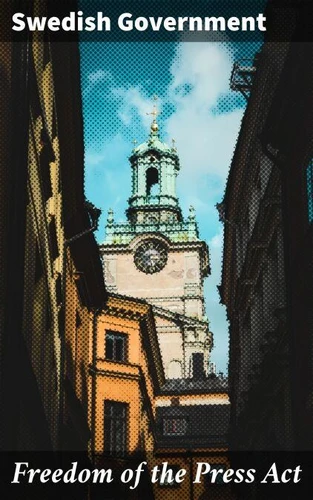
Freedom of the Press Act. Exploring Press Freedom in Sweden: A Legal and Historical Analysis
Par :Formats :
Disponible dans votre compte client Decitre ou Furet du Nord dès validation de votre commande. Le format ePub est :
- Compatible avec une lecture sur My Vivlio (smartphone, tablette, ordinateur)
- Compatible avec une lecture sur liseuses Vivlio
- Pour les liseuses autres que Vivlio, vous devez utiliser le logiciel Adobe Digital Edition. Non compatible avec la lecture sur les liseuses Kindle, Remarkable et Sony
 , qui est-ce ?
Notre partenaire de plateforme de lecture numérique où vous retrouverez l'ensemble de vos ebooks gratuitement
Pour en savoir plus sur nos ebooks, consultez notre aide en ligne ici
C'est si simple ! Lisez votre ebook avec l'app Vivlio sur votre tablette, mobile ou ordinateur :

- Nombre de pages36
- FormatePub
- ISBN406-4-06-646037-2
- EAN4064066460372
- Date de parution11/04/2021
- Protection num.Digital Watermarking
- Taille491 Ko
- Infos supplémentairesepub
- ÉditeurGOOD PRESS
Résumé
The "Freedom of the Press Act" is a pioneering legislative document that enshrines the principles of transparency and accountability in governance. Crafted in a concise yet impactful legal style, the Act represents a groundbreaking moment in Sweden's democratic evolution. Introduced in 1766, it established the right to free expression and granted citizens the authority to access information held by the government, positioning Sweden as a global leader in press freedom during a time when such ideals were scarce.
The Act's historical context is critical, emerging from Enlightenment ideals that championed reason, individual rights, and the free exchange of ideas, aiming to limit censorship and empower the populace against tyranny. The Swedish government'Äôs commitment to civil liberties and the press is exemplified through this revolutionary legislation, which reflects the broader societal transformations of the 18th century.
The intellectual climate of the period, influenced by figures such as Voltaire and Rousseau, provided the impetus for Sweden's early adoption of such laws, marking a significant departure from autocratic practices prevalent in Europe at the time. This bold move laid essential groundwork for modern democratic principles and human rights in governance. The "Freedom of the Press Act" is highly recommended for scholars, journalists, and political enthusiasts alike.
This foundational text not only elucidates the historical trajectory of press freedom but also serves as a vital reference for understanding contemporary democratic practices and the ongoing struggles for free expression worldwide. Readers will find in it both a historical document and a beacon of resilient democratic principles.
The Act's historical context is critical, emerging from Enlightenment ideals that championed reason, individual rights, and the free exchange of ideas, aiming to limit censorship and empower the populace against tyranny. The Swedish government'Äôs commitment to civil liberties and the press is exemplified through this revolutionary legislation, which reflects the broader societal transformations of the 18th century.
The intellectual climate of the period, influenced by figures such as Voltaire and Rousseau, provided the impetus for Sweden's early adoption of such laws, marking a significant departure from autocratic practices prevalent in Europe at the time. This bold move laid essential groundwork for modern democratic principles and human rights in governance. The "Freedom of the Press Act" is highly recommended for scholars, journalists, and political enthusiasts alike.
This foundational text not only elucidates the historical trajectory of press freedom but also serves as a vital reference for understanding contemporary democratic practices and the ongoing struggles for free expression worldwide. Readers will find in it both a historical document and a beacon of resilient democratic principles.