
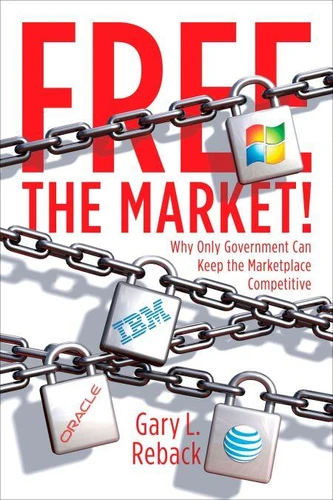
Free the Market!. Why Only Government Can Keep the Marketplace Competitive
Par :Formats :
Disponible dans votre compte client Decitre ou Furet du Nord dès validation de votre commande. Le format ePub protégé est :
- Compatible avec une lecture sur My Vivlio (smartphone, tablette, ordinateur)
- Compatible avec une lecture sur liseuses Vivlio
- Pour les liseuses autres que Vivlio, vous devez utiliser le logiciel Adobe Digital Edition. Non compatible avec la lecture sur les liseuses Kindle, Remarkable et Sony
- Non compatible avec un achat hors France métropolitaine
 , qui est-ce ?
Notre partenaire de plateforme de lecture numérique où vous retrouverez l'ensemble de vos ebooks gratuitement
Pour en savoir plus sur nos ebooks, consultez notre aide en ligne ici
C'est si simple ! Lisez votre ebook avec l'app Vivlio sur votre tablette, mobile ou ordinateur :

- Nombre de pages432
- FormatePub
- ISBN978-1-101-03258-9
- EAN9781101032589
- Date de parution16/04/2009
- Protection num.Adobe DRM
- Taille423 Ko
- Infos supplémentairesepub
- ÉditeurPortfolio
Résumé
Why we need government intervention in the free market to protect competition and encourage innovation Starting about thirty years ago, conservatives forced an overhaul of competition policy that has loosened business rules for everything from selling products to buying competitors. Gary Reback thinks the changes have gone too far. Today's competition policies, he argues, were made for the old manufacturing economy of the 1970s.
But in a high-tech world, these policies actually slow innovation, hurt consumers, and entrench big companies at the expense of entrepreneurs. Free the Market! is both a memoir of Reback's titanic legal battles-involving top companies such as Apple, Microsoft, IBM, Oracle, and AT&T-and a persuasive argument for measured government intervention in the free market to foster competition. Among the fascinating questions he considers: Can a company ever compete too hard for the public good? Should policy makers worry more about promoting competition or improving efficiency? Does it help consumers when a manufacturer sets the prices its retailers charge? Should the government do more to stop controversial mergers? At what point does intellectual property protection hurt innovation?
But in a high-tech world, these policies actually slow innovation, hurt consumers, and entrench big companies at the expense of entrepreneurs. Free the Market! is both a memoir of Reback's titanic legal battles-involving top companies such as Apple, Microsoft, IBM, Oracle, and AT&T-and a persuasive argument for measured government intervention in the free market to foster competition. Among the fascinating questions he considers: Can a company ever compete too hard for the public good? Should policy makers worry more about promoting competition or improving efficiency? Does it help consumers when a manufacturer sets the prices its retailers charge? Should the government do more to stop controversial mergers? At what point does intellectual property protection hurt innovation?