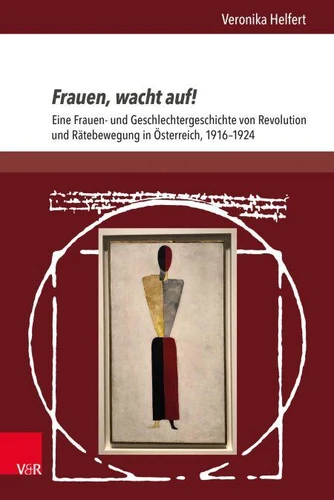
Frauen, wacht auf!. Eine Frauen- und Geschlechtergeschichte von Revolution und Rätebewegung in Österreich, 1916–1924
Par :Formats :
Disponible dans votre compte client Decitre ou Furet du Nord dès validation de votre commande. Le format PDF est :
- Compatible avec une lecture sur My Vivlio (smartphone, tablette, ordinateur)
- Compatible avec une lecture sur liseuses Vivlio
- Pour les liseuses autres que Vivlio, vous devez utiliser le logiciel Adobe Digital Edition. Non compatible avec la lecture sur les liseuses Kindle, Remarkable et Sony
 , qui est-ce ?
Notre partenaire de plateforme de lecture numérique où vous retrouverez l'ensemble de vos ebooks gratuitement
Pour en savoir plus sur nos ebooks, consultez notre aide en ligne ici
C'est si simple ! Lisez votre ebook avec l'app Vivlio sur votre tablette, mobile ou ordinateur :

- Nombre de pages399
- FormatPDF
- ISBN978-3-8470-1184-2
- EAN9783847011842
- Date de parution08/03/2021
- Protection num.pas de protection
- Taille10 Mo
- Infos supplémentairespdf
- ÉditeurV&R Unipress
Résumé
Diese frauen- und geschlechterhistorische Studie untersucht die Transformationsphase von der Habsburgermonarchie zur Ersten Republik unter einem neuen Blickwinkel. Sie fragt einerseits danach, wie sich Geschlecht auf die Art und Weise der Teilhabe von Frauen an der Österreichischen Revolution ausgewirkt hat. Andererseits macht sie Frauen als Akteurinnen sichtbar, die den Neubeginn durch die Republiksgründung dazu nutzten, für eine bessere Welt zu kämpfen.
Die Autorin stellt die Hypothese auf, dass sich unser Verständnis der revolutionären Vorgänge und der Rätebewegung in Österreich maßgeblich verändert, wenn Frauen als Akteurinnen in den Blick genommen werden - was nicht zuletzt unsere Vorstellungen von Revolutionen insgesamt provoziert. This study on women's and gender history examines the period of transformation from the Habsburg Monarchy to the First Republic from a new perspective.
On the one hand, it examines how gender affected the way women participated in the Austrian Revolution. On the other hand, it makes women visible as actors who used the new beginning through the founding of the Republic to fight for a better world. The hypothesis of the study is that our understanding of the revolutionary processes and the council movement in Austria changes significantly when women are considered as actors - which not least provokes our ideas of revolution as a whole.
Die Autorin stellt die Hypothese auf, dass sich unser Verständnis der revolutionären Vorgänge und der Rätebewegung in Österreich maßgeblich verändert, wenn Frauen als Akteurinnen in den Blick genommen werden - was nicht zuletzt unsere Vorstellungen von Revolutionen insgesamt provoziert. This study on women's and gender history examines the period of transformation from the Habsburg Monarchy to the First Republic from a new perspective.
On the one hand, it examines how gender affected the way women participated in the Austrian Revolution. On the other hand, it makes women visible as actors who used the new beginning through the founding of the Republic to fight for a better world. The hypothesis of the study is that our understanding of the revolutionary processes and the council movement in Austria changes significantly when women are considered as actors - which not least provokes our ideas of revolution as a whole.