
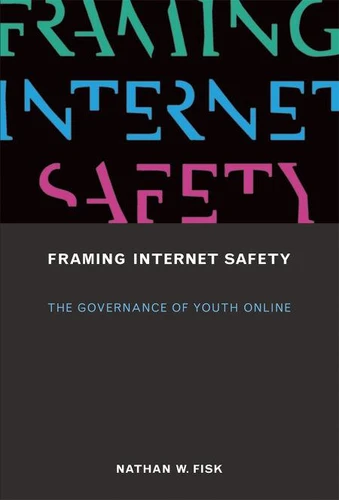
Framing Internet Safety. The Governance of Youth Online
Par :Formats :
Disponible dans votre compte client Decitre ou Furet du Nord dès validation de votre commande. Le format ePub protégé est :
- Compatible avec une lecture sur My Vivlio (smartphone, tablette, ordinateur)
- Compatible avec une lecture sur liseuses Vivlio
- Pour les liseuses autres que Vivlio, vous devez utiliser le logiciel Adobe Digital Edition. Non compatible avec la lecture sur les liseuses Kindle, Remarkable et Sony
- Non compatible avec un achat hors France métropolitaine
 , qui est-ce ?
Notre partenaire de plateforme de lecture numérique où vous retrouverez l'ensemble de vos ebooks gratuitement
Pour en savoir plus sur nos ebooks, consultez notre aide en ligne ici
C'est si simple ! Lisez votre ebook avec l'app Vivlio sur votre tablette, mobile ou ordinateur :

- Nombre de pages232
- FormatePub
- ISBN978-0-262-33580-5
- EAN9780262335805
- Date de parution12/12/2016
- Protection num.Adobe DRM
- Taille376 Ko
- Infos supplémentairesepub
- ÉditeurThe MIT Press
Résumé
An examination of youth Internet safety as a technology of governance, seen in panics over online pornography, predators, bullying, and reputation management. Since the beginning of the Internet era, it has become almost impossible to discuss youth and technology without mentioning online danger-pornography that is just a click away, lurking sexual predators, and inescapable cyberbullies. In this book, Nathan Fisk takes an innovative approach to the subject, examining youth Internet safety as a technology of governance-for information technologies and, by extension, for the forms of sociality and society they make possible.
He argues that it is through the mobilization of various discourses of online risk that the everyday lives of youth are increasingly monitored and policed and the governing potentials of information technologies are explored. Fisk relates particular panics over youth Internet safety to patterns of technological adoption by young people, focusing on the policy response at the federal level aimed at producing future cybercitizens.
He describes pedagogies of surveillance, which position parents as agents of surveillance; the evolution of the youth Internet safety curricula, as seen through materials on cyberbullying and online reputation management; and, drawing on survey results and focus groups, parent and child everyday practice. Finally, Fisk offers recommendations for a "cybersafety of everyday life, " connecting youth Internet safety to trends in national infrastructure protection and corporate information assurance.
He argues that it is through the mobilization of various discourses of online risk that the everyday lives of youth are increasingly monitored and policed and the governing potentials of information technologies are explored. Fisk relates particular panics over youth Internet safety to patterns of technological adoption by young people, focusing on the policy response at the federal level aimed at producing future cybercitizens.
He describes pedagogies of surveillance, which position parents as agents of surveillance; the evolution of the youth Internet safety curricula, as seen through materials on cyberbullying and online reputation management; and, drawing on survey results and focus groups, parent and child everyday practice. Finally, Fisk offers recommendations for a "cybersafety of everyday life, " connecting youth Internet safety to trends in national infrastructure protection and corporate information assurance.