
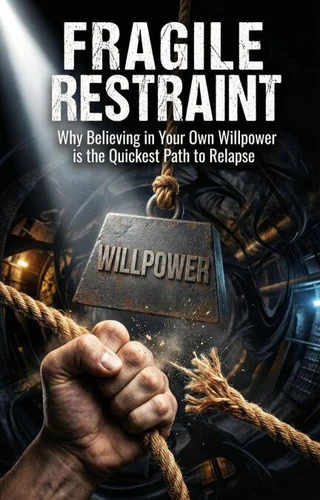
Fragile Restraint. Why Believing in Your Own Willpower is the Quickest Path to Relapse
Par :Formats :
Disponible dans votre compte client Decitre ou Furet du Nord dès validation de votre commande. Le format ePub est :
- Compatible avec une lecture sur My Vivlio (smartphone, tablette, ordinateur)
- Compatible avec une lecture sur liseuses Vivlio
- Pour les liseuses autres que Vivlio, vous devez utiliser le logiciel Adobe Digital Edition. Non compatible avec la lecture sur les liseuses Kindle, Remarkable et Sony
 , qui est-ce ?
Notre partenaire de plateforme de lecture numérique où vous retrouverez l'ensemble de vos ebooks gratuitement
Pour en savoir plus sur nos ebooks, consultez notre aide en ligne ici
C'est si simple ! Lisez votre ebook avec l'app Vivlio sur votre tablette, mobile ou ordinateur :

- Nombre de pages201
- FormatePub
- ISBN978-3-565-29315-5
- EAN9783565293155
- Date de parution04/03/2026
- Protection num.pas de protection
- Taille730 Ko
- Infos supplémentairesepub
- ÉditeurEmphaloz Publishing House
Résumé
It is a familiar cycle: you swear off sugar, delete the social media apps, or promise to stop checking work emails on the weekend. For the first few days, you feel completely in control. But it is precisely this feeling of control that sets the trap. The moment we feel confident in our willpower, we unconsciously expose ourselves to greater temptations, ultimately triggering the exact behaviors we swore to avoid.
This phenomenon is known in psychology as the restraint bias.
We drastically overestimate our capacity for impulse control. When a recovering smoker decides they can handle standing outside with their friends during a smoke break, or a dieter keeps junk food in the cupboard "just for guests, " they are victims of this cognitive illusion. The brain miscalculates the visceral power of future cravings, leading us to abandon the very safety protocols that kept us clean. This book offers a radical rethinking of self-discipline.
It argues that true success comes from environmental design, not mental fortitude. By understanding the restraint bias, you can stop fighting losing battles against your impulses and start engineering a life where willpower is completely unnecessary.
We drastically overestimate our capacity for impulse control. When a recovering smoker decides they can handle standing outside with their friends during a smoke break, or a dieter keeps junk food in the cupboard "just for guests, " they are victims of this cognitive illusion. The brain miscalculates the visceral power of future cravings, leading us to abandon the very safety protocols that kept us clean. This book offers a radical rethinking of self-discipline.
It argues that true success comes from environmental design, not mental fortitude. By understanding the restraint bias, you can stop fighting losing battles against your impulses and start engineering a life where willpower is completely unnecessary.