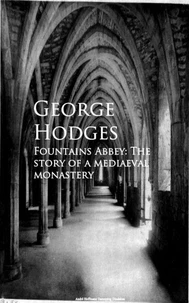
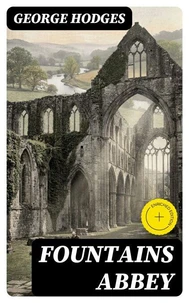
Fountains Abbey. The story of a mediæval monastery
Par :Formats :
Disponible dans votre compte client Decitre ou Furet du Nord dès validation de votre commande. Le format ePub est :
- Compatible avec une lecture sur My Vivlio (smartphone, tablette, ordinateur)
- Compatible avec une lecture sur liseuses Vivlio
- Pour les liseuses autres que Vivlio, vous devez utiliser le logiciel Adobe Digital Edition. Non compatible avec la lecture sur les liseuses Kindle, Remarkable et Sony
 , qui est-ce ?
Notre partenaire de plateforme de lecture numérique où vous retrouverez l'ensemble de vos ebooks gratuitement
Pour en savoir plus sur nos ebooks, consultez notre aide en ligne ici
C'est si simple ! Lisez votre ebook avec l'app Vivlio sur votre tablette, mobile ou ordinateur :

- Nombre de pages755
- FormatePub
- ISBN406-4-06-621609-2
- EAN4064066216092
- Date de parution09/12/2019
- Protection num.Digital Watermarking
- Taille1 Mo
- Infos supplémentairesepub
- ÉditeurGOOD PRESS
Résumé
In "Fountains Abbey, " George Hodges intricately weaves a rich narrative that captures the historical significance and enduring beauty of one of England's most renowned Cistercian monasteries. Employing a lyrical yet accessible literary style, Hodges transports readers through time, exploring the abbey's architectural splendor and its role in the religious and socio-political landscape of the medieval era.
Against a backdrop of profound theological reflection and human ambition, the text deftly balances storytelling with scholarly insight, inviting readers to consider the interplay between faith, culture, and the passage of time. George Hodges, an eminent scholar and writer, had a profound connection to history and literature, likely influenced by his extensive study of related themes throughout his academic and literary career.
His positioning within the early 20th-century literary context'Äîa time marked by a resurgence of interest in Britain'Äôs historical sites'Äîfuels the narrative'Äôs depth, drawing upon both personal reverence for the abbey and the broader revival of Gothic architecture in modern consciousness. Hodges's ability to synthesize historical fact with evocative prose reflects his passion for preserving the past.
For readers interested in the intersection of architecture, history, and literature, "Fountains Abbey" serves as a remarkable portal into the past, elucidating the abbey's significance while enriching the reader's appreciation for England's ecclesiastical heritage. Whether approached as an informative historical account or a meditative literary work, this book is a compelling read for anyone fascinated by the intersection of spirituality and artistry.
Against a backdrop of profound theological reflection and human ambition, the text deftly balances storytelling with scholarly insight, inviting readers to consider the interplay between faith, culture, and the passage of time. George Hodges, an eminent scholar and writer, had a profound connection to history and literature, likely influenced by his extensive study of related themes throughout his academic and literary career.
His positioning within the early 20th-century literary context'Äîa time marked by a resurgence of interest in Britain'Äôs historical sites'Äîfuels the narrative'Äôs depth, drawing upon both personal reverence for the abbey and the broader revival of Gothic architecture in modern consciousness. Hodges's ability to synthesize historical fact with evocative prose reflects his passion for preserving the past.
For readers interested in the intersection of architecture, history, and literature, "Fountains Abbey" serves as a remarkable portal into the past, elucidating the abbey's significance while enriching the reader's appreciation for England's ecclesiastical heritage. Whether approached as an informative historical account or a meditative literary work, this book is a compelling read for anyone fascinated by the intersection of spirituality and artistry.
A propos de George Hodges


1,99 €