SOLDES
Jusqu'à -70% sur une sélection d'articles*

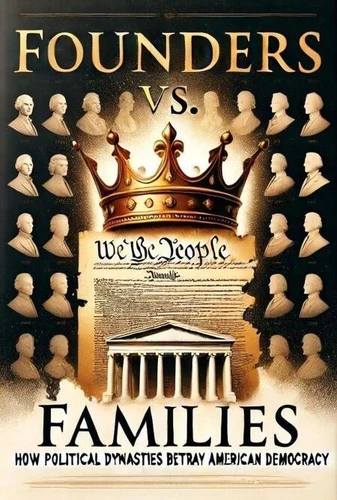
Founders vs. Families: How Political Dynasties Betray American Democracy
Par :Formats :
Disponible dans votre compte client Decitre ou Furet du Nord dès validation de votre commande. Le format ePub est :
- Compatible avec une lecture sur My Vivlio (smartphone, tablette, ordinateur)
- Compatible avec une lecture sur liseuses Vivlio
- Pour les liseuses autres que Vivlio, vous devez utiliser le logiciel Adobe Digital Edition. Non compatible avec la lecture sur les liseuses Kindle, Remarkable et Sony
 , qui est-ce ?
Notre partenaire de plateforme de lecture numérique où vous retrouverez l'ensemble de vos ebooks gratuitement
Pour en savoir plus sur nos ebooks, consultez notre aide en ligne ici
C'est si simple ! Lisez votre ebook avec l'app Vivlio sur votre tablette, mobile ou ordinateur :

- FormatePub
- ISBN8230125181
- EAN9798230125181
- Date de parution25/03/2025
- Protection num.pas de protection
- Infos supplémentairesepub
- ÉditeurIndependently Published
Résumé
Founders vs. Families: How Political Dynasties Betray American Democracy explores the deep tension between America's founding vision of a republic built on merit and the reality of modern political dynasties. Drawing on over three decades of public service and scholarly expertise, Dr. James S. Norcross investigates how inherited power-once a danger the Founders sought to eliminate-has become a defining feature of the contemporary American political landscape.
From the early example of the Adams family to the rise of the Roosevelts, Kennedys, Bushes, and Clintons, this book traces how family names became political brands, often bypassing the mechanisms of merit-based governance. With engaging historical narratives, original data analysis, and sharp political commentary, Norcross dismantles the myth of "legacy competence"-the assumption that a familiar last name equals political capability-and shows how dynasties manipulate media, finances, and party systems to maintain their hold on power.
At the heart of the book lies a provocative argument: political dynasties are not just a symptom of inequality, but an active threat to democratic integrity. Through detailed case studies, media critiques, and policy comparisons, Norcross makes the case that dynastic influence erodes institutional accountability, discourages genuine competition, and undermines the Founders' intent. Whether you are a scholar of governance, a concerned citizen, or simply curious about the deeper forces shaping American leadership, Founders vs.
Families offers a compelling and necessary critique of how far we've drifted from a government "by the people." This book is a call to action for a more vigilant, informed, and meritocratic democratic future.
From the early example of the Adams family to the rise of the Roosevelts, Kennedys, Bushes, and Clintons, this book traces how family names became political brands, often bypassing the mechanisms of merit-based governance. With engaging historical narratives, original data analysis, and sharp political commentary, Norcross dismantles the myth of "legacy competence"-the assumption that a familiar last name equals political capability-and shows how dynasties manipulate media, finances, and party systems to maintain their hold on power.
At the heart of the book lies a provocative argument: political dynasties are not just a symptom of inequality, but an active threat to democratic integrity. Through detailed case studies, media critiques, and policy comparisons, Norcross makes the case that dynastic influence erodes institutional accountability, discourages genuine competition, and undermines the Founders' intent. Whether you are a scholar of governance, a concerned citizen, or simply curious about the deeper forces shaping American leadership, Founders vs.
Families offers a compelling and necessary critique of how far we've drifted from a government "by the people." This book is a call to action for a more vigilant, informed, and meritocratic democratic future.