SOLDES
Jusqu'à -70% sur une sélection d'articles*

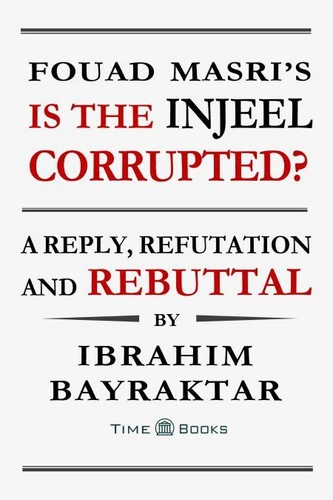
Fouad Masri’s Is the Injeel Corrupted? A Reply, Refutation and Rebuttal. Reply, Refutation and Rebuttal Series, #6
Par :Formats :
Disponible dans votre compte client Decitre ou Furet du Nord dès validation de votre commande. Le format ePub protégé est :
- Compatible avec une lecture sur My Vivlio (smartphone, tablette, ordinateur)
- Compatible avec une lecture sur liseuses Vivlio
- Pour les liseuses autres que Vivlio, vous devez utiliser le logiciel Adobe Digital Edition. Non compatible avec la lecture sur les liseuses Kindle, Remarkable et Sony
- Non compatible avec un achat hors France métropolitaine
 , qui est-ce ?
Notre partenaire de plateforme de lecture numérique où vous retrouverez l'ensemble de vos ebooks gratuitement
Pour en savoir plus sur nos ebooks, consultez notre aide en ligne ici
C'est si simple ! Lisez votre ebook avec l'app Vivlio sur votre tablette, mobile ou ordinateur :

- FormatePub
- ISBN978-1-68109-027-6
- EAN9781681090276
- Date de parution07/06/2016
- Protection num.Adobe DRM
- Infos supplémentairesepub
- ÉditeurTellerBooks
Résumé
In Is the Injeel Corrupted? (Crescent Project, 2006; Book Villages, 2012), Fouad Masri searches for the truth about the New Testament by tackling the question of whether the present-day Injeel (the Gospel) can be trusted, and whether Muslims should read and follow its teachings. Masri further examines the claim that the Bible is both corrupted and unreliable as a source of theological truth about Allah, His will, and the Prophets.
Relying on quotes from the Qur'an, the Bible, and history, Masri concludes that the Bible is true, reliable, and free from corruption. The error thus lies not in the Christian scriptures themselves, but in the Muslim view that the Bible is corrupted. Masri's argumentation is flawed, however, in that it is based on superficial reasoning that only scratches the surface of Islamic theology on the question of the authenticity of the Christian scriptures.
He reaches his conclusions by distorting the meaning of Islamic scripture and calling on readers' emotions to draw them towards a Christian worldview, with arguments that do not hold up to the scrutiny of tight logic. While the book successfully draws readers to sympathize with Christian thought and theology, it ultimately fails to address Muslim concerns from an intellectual perspective.
Relying on quotes from the Qur'an, the Bible, and history, Masri concludes that the Bible is true, reliable, and free from corruption. The error thus lies not in the Christian scriptures themselves, but in the Muslim view that the Bible is corrupted. Masri's argumentation is flawed, however, in that it is based on superficial reasoning that only scratches the surface of Islamic theology on the question of the authenticity of the Christian scriptures.
He reaches his conclusions by distorting the meaning of Islamic scripture and calling on readers' emotions to draw them towards a Christian worldview, with arguments that do not hold up to the scrutiny of tight logic. While the book successfully draws readers to sympathize with Christian thought and theology, it ultimately fails to address Muslim concerns from an intellectual perspective.