SOLDES
Jusqu'à -70% sur une sélection d'articles*

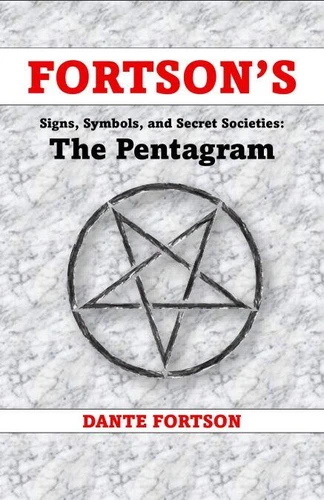
Fortson's Signs, Symbols, and Secret Societies: The Pentagram. Fortson's Signs, Symbols, and Secret Societies
Par :Formats :
Disponible dans votre compte client Decitre ou Furet du Nord dès validation de votre commande. Le format ePub est :
- Compatible avec une lecture sur My Vivlio (smartphone, tablette, ordinateur)
- Compatible avec une lecture sur liseuses Vivlio
- Pour les liseuses autres que Vivlio, vous devez utiliser le logiciel Adobe Digital Edition. Non compatible avec la lecture sur les liseuses Kindle, Remarkable et Sony
 , qui est-ce ?
Notre partenaire de plateforme de lecture numérique où vous retrouverez l'ensemble de vos ebooks gratuitement
Pour en savoir plus sur nos ebooks, consultez notre aide en ligne ici
C'est si simple ! Lisez votre ebook avec l'app Vivlio sur votre tablette, mobile ou ordinateur :

- FormatePub
- ISBN8233588952
- EAN9798233588952
- Date de parution30/12/2025
- Protection num.pas de protection
- Infos supplémentairesepub
- ÉditeurLinda Balsamo
Résumé
The pentagram, a five-pointed star drawn with five continuous straight strokes, is perhaps the most enduring and misunderstood symbol in human history. To some, it is a sign of the divine; to others, a mark of the diabolical. However, its origin lies neither in theology nor in horror, but in the fundamental laws of geometry and the observation of the celestial sphere. For over five millennia, this symbol has served as a bridge between the mathematical and the mystical, evolving from a simple administrative mark in the cradle of civilization to a complex icon of modern religious and political identity.
Historically, the pentagram has functioned as a "shifting signifier, " a term used by semioticians to describe a symbol whose meaning changes based on the culture that utilizes it. It has represented the five wounds of Christ, the five elements of the universe, the proportions of the human body, and the gravitational dance of the planet Venus. In the ancient world, it was a symbol of health and harmony; in the medieval period, it was a badge of knightly virtue; and in the modern era, it has become a focal point for both spiritual devotion and social rebellion.
This book explores the objective history of the pentagram, from its first appearance in ancient Mesopotamia to its current status in global culture.
Historically, the pentagram has functioned as a "shifting signifier, " a term used by semioticians to describe a symbol whose meaning changes based on the culture that utilizes it. It has represented the five wounds of Christ, the five elements of the universe, the proportions of the human body, and the gravitational dance of the planet Venus. In the ancient world, it was a symbol of health and harmony; in the medieval period, it was a badge of knightly virtue; and in the modern era, it has become a focal point for both spiritual devotion and social rebellion.
This book explores the objective history of the pentagram, from its first appearance in ancient Mesopotamia to its current status in global culture.