SOLDES
Jusqu'à -70% sur une sélection d'articles*

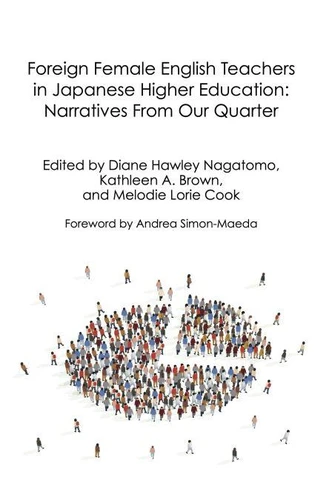
Foreign Female English Teachers in Japanese Higher Education: Narratives From Our Quarter
Par : , ,Formats :
Disponible dans votre compte client Decitre ou Furet du Nord dès validation de votre commande. Le format ePub est :
- Compatible avec une lecture sur My Vivlio (smartphone, tablette, ordinateur)
- Compatible avec une lecture sur liseuses Vivlio
- Pour les liseuses autres que Vivlio, vous devez utiliser le logiciel Adobe Digital Edition. Non compatible avec la lecture sur les liseuses Kindle, Remarkable et Sony
 , qui est-ce ?
Notre partenaire de plateforme de lecture numérique où vous retrouverez l'ensemble de vos ebooks gratuitement
Pour en savoir plus sur nos ebooks, consultez notre aide en ligne ici
C'est si simple ! Lisez votre ebook avec l'app Vivlio sur votre tablette, mobile ou ordinateur :

- FormatePub
- ISBN978-1-005-29124-2
- EAN9781005291242
- Date de parution30/08/2020
- Protection num.pas de protection
- Infos supplémentairesepub
- ÉditeurC. C. Chamberlane
Résumé
The goal of this book is to provide information, inspiration, and mentorship to teachers (namely foreign women, but not restricted to such) as they navigate the gendered waters of teaching English in Japanese higher education. Such a book is timely because foreign female university teachers are outnumbered by their foreign male colleagues by nearly three to one. This imbalance, however, is likely to change as reforms in hiring policies (which have until recently generally favored male applicants) have been widely implemented to encourage more female teachers and researchers.
The narratives by the contributors to this book offer a kaleidoscope of experiences that transverse several loosely connected and overlapping themes. This book is, in a sense, a "girlfriend's guide to teaching in a Japanese university" in that it provides much practical information from those who are already in the field. It covers areas such as gaining entry into Japanese higher education teaching, searching for and obtaining tenure, managing a long-term professorial career, and taking on leadership responsibilities.
The personal side of teaching is examined, with authors describing how individual interests have shaped their teaching practices. Family matters, such as negotiating maternity leave, reentering the workforce, and difficulties in balancing family and work are discussed by those who have "been there and done that". The darker issues of the job, such as harassment, racism, and native-speakerism are introduced, and several chapters with practical and legal information about how to combat them are included, as well as a list of valuable resources.
The contributors to this volume have drawn upon their own unique experiences and have situated their stories in areas that are of great personal importance. The individual narratives, when taken together, highlight not only the complexity of the professional identity of EFL teachers but also the myriad of issues that shape the careers of women in Japanese higher education. These issues will resonate with all female EFL faculty, regardless of their geographical location.
The narratives by the contributors to this book offer a kaleidoscope of experiences that transverse several loosely connected and overlapping themes. This book is, in a sense, a "girlfriend's guide to teaching in a Japanese university" in that it provides much practical information from those who are already in the field. It covers areas such as gaining entry into Japanese higher education teaching, searching for and obtaining tenure, managing a long-term professorial career, and taking on leadership responsibilities.
The personal side of teaching is examined, with authors describing how individual interests have shaped their teaching practices. Family matters, such as negotiating maternity leave, reentering the workforce, and difficulties in balancing family and work are discussed by those who have "been there and done that". The darker issues of the job, such as harassment, racism, and native-speakerism are introduced, and several chapters with practical and legal information about how to combat them are included, as well as a list of valuable resources.
The contributors to this volume have drawn upon their own unique experiences and have situated their stories in areas that are of great personal importance. The individual narratives, when taken together, highlight not only the complexity of the professional identity of EFL teachers but also the myriad of issues that shape the careers of women in Japanese higher education. These issues will resonate with all female EFL faculty, regardless of their geographical location.