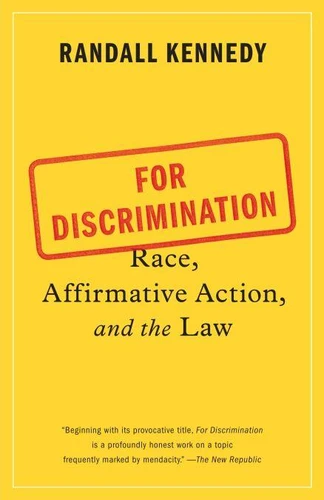
For Discrimination. Race, Affirmative Action, and the Law
Par :Formats :
Disponible dans votre compte client Decitre ou Furet du Nord dès validation de votre commande. Le format ePub protégé est :
- Compatible avec une lecture sur My Vivlio (smartphone, tablette, ordinateur)
- Compatible avec une lecture sur liseuses Vivlio
- Pour les liseuses autres que Vivlio, vous devez utiliser le logiciel Adobe Digital Edition. Non compatible avec la lecture sur les liseuses Kindle, Remarkable et Sony
- Non compatible avec un achat hors France métropolitaine
 , qui est-ce ?
Notre partenaire de plateforme de lecture numérique où vous retrouverez l'ensemble de vos ebooks gratuitement
Pour en savoir plus sur nos ebooks, consultez notre aide en ligne ici
C'est si simple ! Lisez votre ebook avec l'app Vivlio sur votre tablette, mobile ou ordinateur :

- Nombre de pages304
- FormatePub
- ISBN978-0-307-90738-7
- EAN9780307907387
- Date de parution03/09/2013
- Protection num.Adobe DRM
- Taille2 Mo
- Infos supplémentairesepub
- ÉditeurVintage
Résumé
The definitive reckoning with Affirmative Action, one of America's most explosively contentious and divisive issues-from "one of our most important and perceptive writers on race and the law."-The Washington Post "A clear-eyed take on America's battle over affirmative action and diversity.... [Kennedy] goes straight at the issue with fearlessness and a certain cheekiness." -Los Angeles Times "Compelling....
Powerful." -Wall Street JournalWhat precisely is affirmative action, and why is it fiercely championed by some and just as fiercely denounced by others? Does it signify a boon or a stigma? Or is it simply reverse discrimination? What are its benefits and costs to American society? What are the exact indicia determining who should or should not be accorded affirmative action? When should affirmative action end, if it must? Randall Kennedy gives us a concise and deeply personal overview of the policy, refusing to shy away from the myriad complexities of an issue that continues to bedevil American race relations.
Powerful." -Wall Street JournalWhat precisely is affirmative action, and why is it fiercely championed by some and just as fiercely denounced by others? Does it signify a boon or a stigma? Or is it simply reverse discrimination? What are its benefits and costs to American society? What are the exact indicia determining who should or should not be accorded affirmative action? When should affirmative action end, if it must? Randall Kennedy gives us a concise and deeply personal overview of the policy, refusing to shy away from the myriad complexities of an issue that continues to bedevil American race relations.