
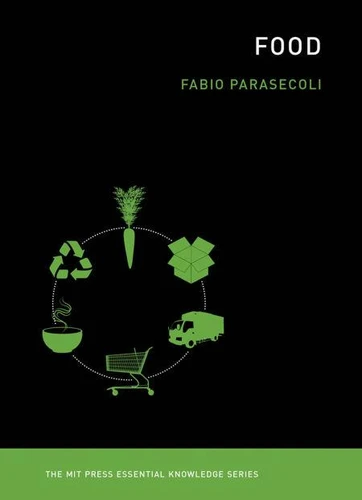
Food
Par :Formats :
Disponible dans votre compte client Decitre ou Furet du Nord dès validation de votre commande. Le format ePub protégé est :
- Compatible avec une lecture sur My Vivlio (smartphone, tablette, ordinateur)
- Compatible avec une lecture sur liseuses Vivlio
- Pour les liseuses autres que Vivlio, vous devez utiliser le logiciel Adobe Digital Edition. Non compatible avec la lecture sur les liseuses Kindle, Remarkable et Sony
- Non compatible avec un achat hors France métropolitaine
 , qui est-ce ?
Notre partenaire de plateforme de lecture numérique où vous retrouverez l'ensemble de vos ebooks gratuitement
Pour en savoir plus sur nos ebooks, consultez notre aide en ligne ici
C'est si simple ! Lisez votre ebook avec l'app Vivlio sur votre tablette, mobile ou ordinateur :

- Nombre de pages232
- FormatePub
- ISBN978-0-262-35378-6
- EAN9780262353786
- Date de parution28/05/2019
- Protection num.Adobe DRM
- Taille177 Ko
- Infos supplémentairesepub
- ÉditeurThe MIT Press
Résumé
A consumer's guide to the food system, from local to global: our part as citizens in the interconnected networks, institutions, and organizations that enable our food choices. Everybody eats. We may even consider ourselves experts on the topic, or at least Instagram experts. But are we aware that the shrimp in our freezer may be farmed and frozen in Vietnam, the grapes in our fruit bowl shipped from Chile, and the coffee in our coffee maker grown in Nicaragua, roasted in Germany, and distributed in Canada? Whether we know it or not, every time we shop for food, cook, and eat, we connect ourselves to complex supply networks, institutions, and organizations that enable our food choices.
Even locavores may not know the whole story of the produce they buy at the farmers market. In this volume in the MIT Press Essential Knowledge series, food writer and scholar Fabio Parasecoli offers a consumer's guide to the food system, from local to global. Parasecoli describes a system made up of open-ended, shifting, and unstable networks rather than well-defined chains; considers healthy food and the contradictory advice about it consumers receive; discusses food waste and the implications for sustainability; explores food technologies (and "culinary luddism"); and examines hunger and food insecurity in both developing and developed countries.
Parasecoli reminds us that we are not only consumers but also citizens, and as citizens we have more power to improve the food system than we do by our individual food choices.
Even locavores may not know the whole story of the produce they buy at the farmers market. In this volume in the MIT Press Essential Knowledge series, food writer and scholar Fabio Parasecoli offers a consumer's guide to the food system, from local to global. Parasecoli describes a system made up of open-ended, shifting, and unstable networks rather than well-defined chains; considers healthy food and the contradictory advice about it consumers receive; discusses food waste and the implications for sustainability; explores food technologies (and "culinary luddism"); and examines hunger and food insecurity in both developing and developed countries.
Parasecoli reminds us that we are not only consumers but also citizens, and as citizens we have more power to improve the food system than we do by our individual food choices.