SOLDES
Jusqu'à -70% sur une sélection d'articles*

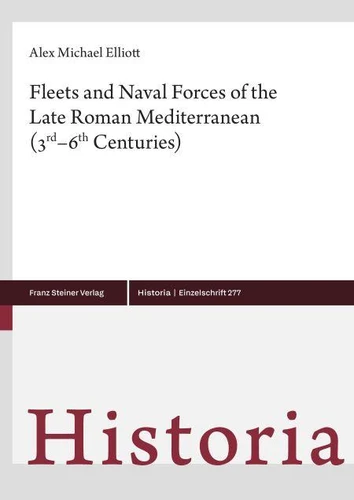
Fleets and Naval Forces of the Late Roman Mediterranean (3rd–6th Centuries)
Par :Formats :
Disponible dans votre compte client Decitre ou Furet du Nord dès validation de votre commande. Le format PDF est :
- Compatible avec une lecture sur My Vivlio (smartphone, tablette, ordinateur)
- Compatible avec une lecture sur liseuses Vivlio
- Pour les liseuses autres que Vivlio, vous devez utiliser le logiciel Adobe Digital Edition. Non compatible avec la lecture sur les liseuses Kindle, Remarkable et Sony
 , qui est-ce ?
Notre partenaire de plateforme de lecture numérique où vous retrouverez l'ensemble de vos ebooks gratuitement
Pour en savoir plus sur nos ebooks, consultez notre aide en ligne ici
C'est si simple ! Lisez votre ebook avec l'app Vivlio sur votre tablette, mobile ou ordinateur :

- Nombre de pages245
- FormatPDF
- ISBN978-3-515-13997-7
- EAN9783515139977
- Date de parution18/09/2025
- Protection num.Digital Watermarking
- Taille5 Mo
- Infos supplémentairespdf
- ÉditeurFranz Steiner
Résumé
The fleets and naval forces employed by the Roman Empire have traditionally been conceived as a 'Roman navy' that guarded the waterways of the Mediterranean and the northern frontier. No longer facing major competition at sea, this navy is supposed to have gradually decayed over the 1st and 2nd centuries until being swept away during the barbarian invasions of the 3rd. Directly challenging the concept of a 'Roman navy' and associated narratives of institutional decline, this book reassesses the role and development of fleets and naval forces of the late Roman Mediterranean (3rd-6th centuries).
This is accomplished through a systematic investigation into the fate of the early imperial classes as well as the creation and development of new classes in the later Empire. Beyond these obvious naval forces, this book also examines the employment of ships by other 'non-naval' military units and the creation of ad hoc fleets for major campaigns. Finally, it analyses the evolution in design and employment of military galleys over the same period, providing a more comprehensive and balanced understanding of the role and transformation of the fleets and ships used by the late Roman military.
This is accomplished through a systematic investigation into the fate of the early imperial classes as well as the creation and development of new classes in the later Empire. Beyond these obvious naval forces, this book also examines the employment of ships by other 'non-naval' military units and the creation of ad hoc fleets for major campaigns. Finally, it analyses the evolution in design and employment of military galleys over the same period, providing a more comprehensive and balanced understanding of the role and transformation of the fleets and ships used by the late Roman military.