
Nouveauté
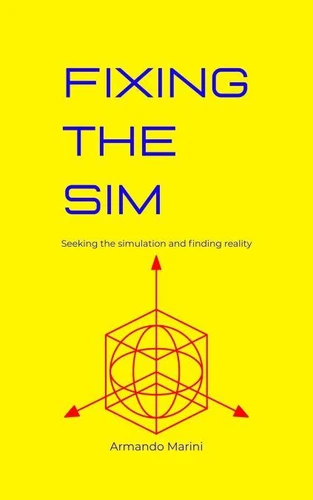
Fixing The Sim
Par :Formats :
Disponible dans votre compte client Decitre ou Furet du Nord dès validation de votre commande. Le format ePub est :
- Compatible avec une lecture sur My Vivlio (smartphone, tablette, ordinateur)
- Compatible avec une lecture sur liseuses Vivlio
- Pour les liseuses autres que Vivlio, vous devez utiliser le logiciel Adobe Digital Edition. Non compatible avec la lecture sur les liseuses Kindle, Remarkable et Sony
 , qui est-ce ?
Notre partenaire de plateforme de lecture numérique où vous retrouverez l'ensemble de vos ebooks gratuitement
Pour en savoir plus sur nos ebooks, consultez notre aide en ligne ici
C'est si simple ! Lisez votre ebook avec l'app Vivlio sur votre tablette, mobile ou ordinateur :

- FormatePub
- ISBN8235033092
- EAN9798235033092
- Date de parution11/08/2026
- Protection num.pas de protection
- Infos supplémentairesepub
- ÉditeurIoakim Ioakim
Résumé
You are not so much a part of the machine as you are the reason the machine runs at all. A. J. Marini spent thirty years building video games (boss fights, difficulty curves, exploits). Then his own game glitched. A studio collapsed, a career trajectory crashed, a father died. He started wondering if the rules he'd been coding into other people's worlds were running quietly underneath his own. Fixing the Sim is what came out of that.
Part physics, part philosophy, part the true story of a life that crashed and reloaded, it asks a simple question with enormous stakes: if reality behaves like a simulation, is it? And how would you play it differently if it were?Marini alternates plain-spoken chapters on game design such as the grind, the hook, the boss fight, with harder chapters on relativity, quantum mechanics, and consciousness, building toward what he calls the Causal Sphere.
A space where living things originate choice from the possibilities before them. He's not a physicist and he's not a philosopher. He's the only person writing about the simulation who has actually built one. That's the whole case for reading this book instead of the next one. Pick up the controller. Let's begin.
Part physics, part philosophy, part the true story of a life that crashed and reloaded, it asks a simple question with enormous stakes: if reality behaves like a simulation, is it? And how would you play it differently if it were?Marini alternates plain-spoken chapters on game design such as the grind, the hook, the boss fight, with harder chapters on relativity, quantum mechanics, and consciousness, building toward what he calls the Causal Sphere.
A space where living things originate choice from the possibilities before them. He's not a physicist and he's not a philosopher. He's the only person writing about the simulation who has actually built one. That's the whole case for reading this book instead of the next one. Pick up the controller. Let's begin.