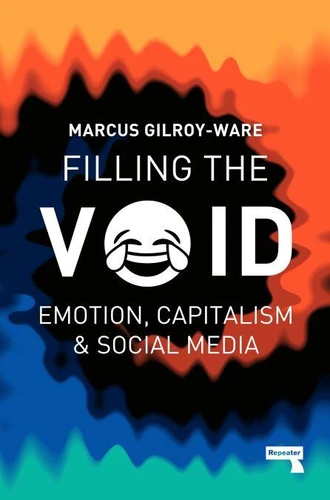
Filling The Void is a book about how the cultures and psychology of social media use fit within a broader landscape of life under capitalism. It argues that social media use is often a psychological response to the need for pleasure and comfort that results from the stresses of life under postmodern capitalism, rather than being a driver of new behaviours as newer technologies are often said to be.
Both the explosive growth of social media and the corresponding reconfiguration of the web from an information-based platform into an entertainment-based one are far more easily explained in terms of the subjective psychological experience of their users as capitalist subjects seeking 'depressive hedonia, ' the book argues. Filling the Void also interrogates the role of social media networks, designed for private commercial gain, as part of a de-facto public sphere.
Both the decreasing subjective importance of factual media and the ways in which the content of the timeline are quietly manipulated--often using labour in the developing world and secret algorithms--have potentially serious implications for the capacity of social media users to query or challenge the seeming reality offered by the established hegemonic order.
Filling The Void is a book about how the cultures and psychology of social media use fit within a broader landscape of life under capitalism. It argues that social media use is often a psychological response to the need for pleasure and comfort that results from the stresses of life under postmodern capitalism, rather than being a driver of new behaviours as newer technologies are often said to be.
Both the explosive growth of social media and the corresponding reconfiguration of the web from an information-based platform into an entertainment-based one are far more easily explained in terms of the subjective psychological experience of their users as capitalist subjects seeking 'depressive hedonia, ' the book argues. Filling the Void also interrogates the role of social media networks, designed for private commercial gain, as part of a de-facto public sphere.
Both the decreasing subjective importance of factual media and the ways in which the content of the timeline are quietly manipulated--often using labour in the developing world and secret algorithms--have potentially serious implications for the capacity of social media users to query or challenge the seeming reality offered by the established hegemonic order.


 , qui est-ce ?
