SOLDES
Jusqu'à -70% sur une sélection d'articles*
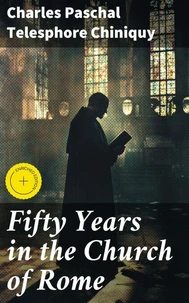
Fifty Years in the Church of Rome
Par :Formats :
Disponible dans votre compte client Decitre ou Furet du Nord dès validation de votre commande. Le format ePub est :
- Compatible avec une lecture sur My Vivlio (smartphone, tablette, ordinateur)
- Compatible avec une lecture sur liseuses Vivlio
- Pour les liseuses autres que Vivlio, vous devez utiliser le logiciel Adobe Digital Edition. Non compatible avec la lecture sur les liseuses Kindle, Remarkable et Sony
 , qui est-ce ?
Notre partenaire de plateforme de lecture numérique où vous retrouverez l'ensemble de vos ebooks gratuitement
Pour en savoir plus sur nos ebooks, consultez notre aide en ligne ici
C'est si simple ! Lisez votre ebook avec l'app Vivlio sur votre tablette, mobile ou ordinateur :

- Nombre de pages748
- FormatePub
- ISBN859-65--4705316-3
- EAN8596547053163
- Date de parution02/06/2022
- Protection num.Digital Watermarking
- Taille2 Mo
- Infos supplémentairesepub
- ÉditeurDIGICAT
Résumé
In "Fifty Years in the Church of Rome, " Charles Paschal Telesphore Chiniquy offers a candid and riveting memoir that chronicles his spiritual journey from Catholic priesthood to Protestantism, providing a critical exposé of the practices and doctrines of the Roman Catholic Church during the 19th century. The narrative unfolds with remarkable clarity and fervor, combining personal anecdotes with theological critiques, ultimately revealing the tensions between faith and institutional dogma.
Chiniquy's literary style is engaging, employing a first-person perspective that immerses readers in his emotional struggles and theological dilemmas, thus placing the work within the broader context of emerging Protestant critiques of Catholicism in America. Chiniquy was ordained as a Catholic priest in Canada and spent over 25 years in the Church, which granted him an insider's perspective that is both unique and authoritative.
His subsequent disillusionment, catalyzed by personal experiences with Church authorities and doctrinal disputes, led him to embrace Protestantism and become a notable figure in the anti-Catholic movement of his time. His profound insights into the inner workings of the Church were shaped by his intensive theological training and the challenges he faced.
Chiniquy's literary style is engaging, employing a first-person perspective that immerses readers in his emotional struggles and theological dilemmas, thus placing the work within the broader context of emerging Protestant critiques of Catholicism in America. Chiniquy was ordained as a Catholic priest in Canada and spent over 25 years in the Church, which granted him an insider's perspective that is both unique and authoritative.
His subsequent disillusionment, catalyzed by personal experiences with Church authorities and doctrinal disputes, led him to embrace Protestantism and become a notable figure in the anti-Catholic movement of his time. His profound insights into the inner workings of the Church were shaped by his intensive theological training and the challenges he faced.