SOLDES
Jusqu'à -70% sur une sélection d'articles*

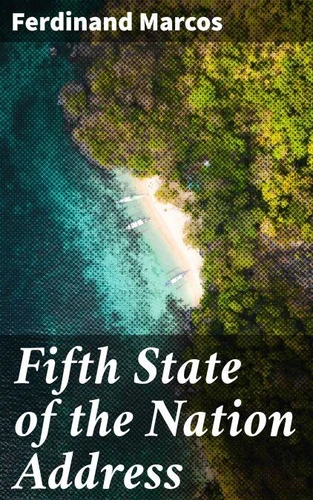
Fifth State of the Nation Address. A Dictator's Ambitions: Understanding Marcos' Governance Through His Seminal Speech
Par :Formats :
Disponible dans votre compte client Decitre ou Furet du Nord dès validation de votre commande. Le format ePub est :
- Compatible avec une lecture sur My Vivlio (smartphone, tablette, ordinateur)
- Compatible avec une lecture sur liseuses Vivlio
- Pour les liseuses autres que Vivlio, vous devez utiliser le logiciel Adobe Digital Edition. Non compatible avec la lecture sur les liseuses Kindle, Remarkable et Sony
 , qui est-ce ?
Notre partenaire de plateforme de lecture numérique où vous retrouverez l'ensemble de vos ebooks gratuitement
Pour en savoir plus sur nos ebooks, consultez notre aide en ligne ici
C'est si simple ! Lisez votre ebook avec l'app Vivlio sur votre tablette, mobile ou ordinateur :

- Nombre de pages60
- FormatePub
- ISBN406-4-06-644568-3
- EAN4064066445683
- Date de parution11/04/2021
- Protection num.Digital Watermarking
- Taille675 Ko
- Infos supplémentairesepub
- ÉditeurGOOD PRESS
Résumé
Ferdinand Marcos's 'Fifth State of the Nation Address' stands as a pragmatic manifestation of political rhetoric deeply embedded in the socio-political landscape of the Philippines during the late 1970s. The address reflects a distinctive literary style, characterized by formal prose interspersed with persuasive oratory that aims to reinforce his administration'Äôs achievements and aspirations amidst a backdrop of martial law.
It serves as both a public address and a historical document, guiding readers through the complexities of governance, national development initiatives, and the perceived threats to national sovereignty, all framed within Marcos's vision for a 'New Society.' Ferdinand Marcos, who served as president of the Philippines from 1965 to 1986, crafted this address during a turbulent time in Philippine history, marked by challenges such as civil unrest and economic difficulties.
Marcos's tenure was deeply intertwined with themes of nationalism and authoritarianism, and his experiences in both military service and political maneuvering informed the rhetoric he employed. The address reflects his efforts to justify his regime's controversial policies and to consolidate his power amid international and domestic challenges. For scholars, students of political science, and general readers alike, 'Fifth State of the Nation Address' proves invaluable as a primary source document that offers insights into the era's political climate and Marcos's governing philosophies.
It invites readers to critically assess the intersection of language, power, and statecraft, making it essential for understanding the complexities of Philippine history and governance.
It serves as both a public address and a historical document, guiding readers through the complexities of governance, national development initiatives, and the perceived threats to national sovereignty, all framed within Marcos's vision for a 'New Society.' Ferdinand Marcos, who served as president of the Philippines from 1965 to 1986, crafted this address during a turbulent time in Philippine history, marked by challenges such as civil unrest and economic difficulties.
Marcos's tenure was deeply intertwined with themes of nationalism and authoritarianism, and his experiences in both military service and political maneuvering informed the rhetoric he employed. The address reflects his efforts to justify his regime's controversial policies and to consolidate his power amid international and domestic challenges. For scholars, students of political science, and general readers alike, 'Fifth State of the Nation Address' proves invaluable as a primary source document that offers insights into the era's political climate and Marcos's governing philosophies.
It invites readers to critically assess the intersection of language, power, and statecraft, making it essential for understanding the complexities of Philippine history and governance.