Explores finance, institutional power, and economic crises through narrative-driven nonfiction aimed at broad audiences.
Nouveauté
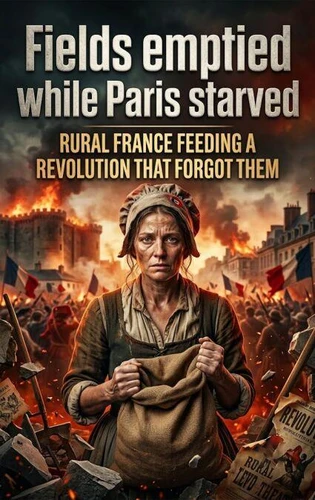
Fields emptied while Paris starved. Rural France feeding a revolution that forgot them
Par :Formats :
Disponible dans votre compte client Decitre ou Furet du Nord dès validation de votre commande. Le format ePub est :
- Compatible avec une lecture sur My Vivlio (smartphone, tablette, ordinateur)
- Compatible avec une lecture sur liseuses Vivlio
- Pour les liseuses autres que Vivlio, vous devez utiliser le logiciel Adobe Digital Edition. Non compatible avec la lecture sur les liseuses Kindle, Remarkable et Sony
 , qui est-ce ?
Notre partenaire de plateforme de lecture numérique où vous retrouverez l'ensemble de vos ebooks gratuitement
Pour en savoir plus sur nos ebooks, consultez notre aide en ligne ici
C'est si simple ! Lisez votre ebook avec l'app Vivlio sur votre tablette, mobile ou ordinateur :

- Nombre de pages223
- FormatePub
- ISBN978-3-565-55273-3
- EAN9783565552733
- Date de parution09/07/2026
- Protection num.pas de protection
- Taille608 Ko
- Infos supplémentairesepub
- ÉditeurEmphaloz Publishing House
Résumé
In the summer of 1789, a peasant woman in the Limousin watched her parish priest read a letter from Versailles about grain prices and taxes. She did not know that she was living through the beginning of a revolution. This book is not about the famous men who made speeches in Paris. It is about the people who woke up one morning in a world where the rules had stopped working. The revolution reached them through bread shortages, military conscription, the closing of churches, and the arrival of revolutionary committees in their villages.
In cities like Lyon, Marseille, and Nantes, artisans and workers faced collapsing trade, inflation, and the constant threat of famine while deputies in Paris debated the rights of man. The revolutionary government demanded loyalty, taxes, and sons for the army, but offered little protection from hunger or violence. The Vendée became a civil war where neighbor killed neighbor over faith and land, not ideology.
By 1794, the revolution had consumed its own children-local officials executed for insufficient zeal, priests murdered for refusing oaths, and ordinary people caught between the guillotine and starvation. This book reconstructs the daily experience of survival under a regime that claimed to create a new world while burning the old one down. It asks not what the revolution meant, but what it cost in the lives of those who had no choice but to endure it.
In cities like Lyon, Marseille, and Nantes, artisans and workers faced collapsing trade, inflation, and the constant threat of famine while deputies in Paris debated the rights of man. The revolutionary government demanded loyalty, taxes, and sons for the army, but offered little protection from hunger or violence. The Vendée became a civil war where neighbor killed neighbor over faith and land, not ideology.
By 1794, the revolution had consumed its own children-local officials executed for insufficient zeal, priests murdered for refusing oaths, and ordinary people caught between the guillotine and starvation. This book reconstructs the daily experience of survival under a regime that claimed to create a new world while burning the old one down. It asks not what the revolution meant, but what it cost in the lives of those who had no choice but to endure it.