SOLDES
Jusqu'à -70% sur une sélection d'articles*

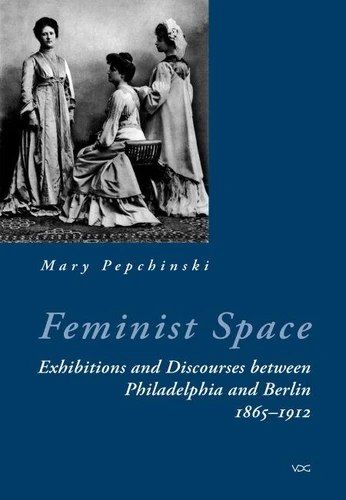
Feminist Space. Exhibitions and Discourses between Philadelphia and Berlin 1865-1912
Par :Formats :
Disponible dans votre compte client Decitre ou Furet du Nord dès validation de votre commande. Le format PDF est :
- Compatible avec une lecture sur My Vivlio (smartphone, tablette, ordinateur)
- Compatible avec une lecture sur liseuses Vivlio
- Pour les liseuses autres que Vivlio, vous devez utiliser le logiciel Adobe Digital Edition. Non compatible avec la lecture sur les liseuses Kindle, Remarkable et Sony
 , qui est-ce ?
Notre partenaire de plateforme de lecture numérique où vous retrouverez l'ensemble de vos ebooks gratuitement
Pour en savoir plus sur nos ebooks, consultez notre aide en ligne ici
C'est si simple ! Lisez votre ebook avec l'app Vivlio sur votre tablette, mobile ou ordinateur :

- Nombre de pages251
- FormatPDF
- ISBN978-3-95899-335-8
- EAN9783958993358
- Date de parution12/06/2007
- Protection num.Digital Watermarking
- Taille16 Mo
- Infos supplémentairespdf
- ÉditeurVDG Weimar - Verlag und Datenb
Résumé
Feminist Space: Exhibitions and Discourses between Philadelphia and Berlin, 1865-1912 investigates the relationship between gender and the production of public space, namely the exhibitions of feminine bourgeois culture that were created in Berlin between 1865 and 1912. This book demonstrates that these exhibitions gave expression to evolving bourgeois feminist discourses that proposed an expanded public sphere, containing separate and equal, masculine and feminine qualities.
In addition, these feminine exhibitions were enriched by contact with and participation in the Woman's Buildings constructed at the 1876 (Philadelphia) and 1893 (Chicago) American world exhibitions, as well as the ideals of the German applied arts movement. As the exhibitions of feminine bourgeois culture were hugely popular and financially successful events, they attracted attention and stimulated discourse and debate.
This book proposes that German bourgeois feminists created unique public spaces, which can be seen as contributing to the seminal architectural culture, which emerged in Germany prior to 1914.
In addition, these feminine exhibitions were enriched by contact with and participation in the Woman's Buildings constructed at the 1876 (Philadelphia) and 1893 (Chicago) American world exhibitions, as well as the ideals of the German applied arts movement. As the exhibitions of feminine bourgeois culture were hugely popular and financially successful events, they attracted attention and stimulated discourse and debate.
This book proposes that German bourgeois feminists created unique public spaces, which can be seen as contributing to the seminal architectural culture, which emerged in Germany prior to 1914.