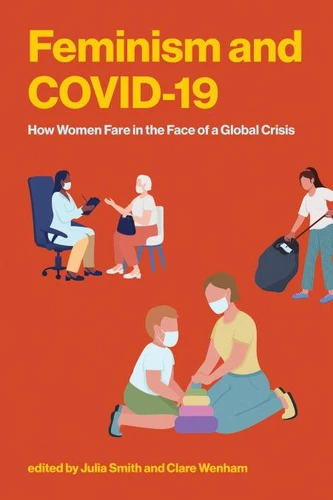
Feminism and COVID-19. How Women Fare in the Face of a Global Crisis
Par : ,Formats :
Disponible dans votre compte client Decitre ou Furet du Nord dès validation de votre commande. Le format ePub protégé est :
- Compatible avec une lecture sur My Vivlio (smartphone, tablette, ordinateur)
- Compatible avec une lecture sur liseuses Vivlio
- Pour les liseuses autres que Vivlio, vous devez utiliser le logiciel Adobe Digital Edition. Non compatible avec la lecture sur les liseuses Kindle, Remarkable et Sony
- Non compatible avec un achat hors France métropolitaine
 , qui est-ce ?
Notre partenaire de plateforme de lecture numérique où vous retrouverez l'ensemble de vos ebooks gratuitement
Pour en savoir plus sur nos ebooks, consultez notre aide en ligne ici
C'est si simple ! Lisez votre ebook avec l'app Vivlio sur votre tablette, mobile ou ordinateur :

- Nombre de pages240
- FormatePub
- ISBN978-0-262-38570-1
- EAN9780262385701
- Date de parution17/02/2026
- Protection num.Adobe DRM
- Taille2 Mo
- Infos supplémentairesepub
- ÉditeurThe MIT Press
Résumé
How dominant patriarchal structures permeated the global response to the COVID-19 pandemic-and women's multiple and varied experiences of and resistance to these structures. Feminism and COVID-19 explores different but common themes related to women's experiences of the COVID-19 pandemic. Julia Smith and Clare Wenham bring together a unique multicentered, multidisciplinary, and transnational author team, covering nine case studies from Bangladesh, Brazil, Canada, China, the Democratic Republic of Congo, Hong Kong, Kenya, Nigeria, and the United Kingdom.
The chapters reveal how women around the world were both central to the delivery of the COVID-19 response, albeit unrecognized, and disproportionately affected by its secondary effects. The lost income and opportunities, as well as increased unpaid care work and violence, were not caused by the pathogen but by preexisting structural inequities that pervade global political, economic, and social systems and structures.
This inequality permeated global and local responses to the pandemic, which, on the whole, only included gender considerations in the most superficial ways but not in terms of money, protection, or resources. The transnational feminist perspectives speak to both global patterns and local heterogeneity, emphasizing the importance of highlighting the localized experiences of different groups of women impacted by the same global crisis.
The chapters reveal how women around the world were both central to the delivery of the COVID-19 response, albeit unrecognized, and disproportionately affected by its secondary effects. The lost income and opportunities, as well as increased unpaid care work and violence, were not caused by the pathogen but by preexisting structural inequities that pervade global political, economic, and social systems and structures.
This inequality permeated global and local responses to the pandemic, which, on the whole, only included gender considerations in the most superficial ways but not in terms of money, protection, or resources. The transnational feminist perspectives speak to both global patterns and local heterogeneity, emphasizing the importance of highlighting the localized experiences of different groups of women impacted by the same global crisis.