SOLDES
Jusqu'à -70% sur une sélection d'articles*

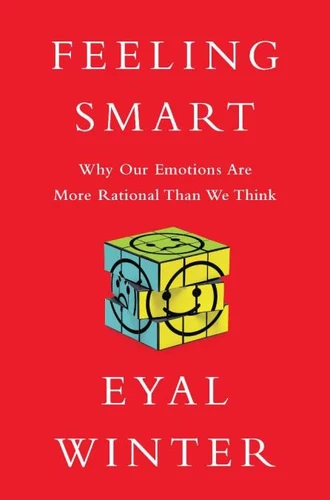
Feeling Smart. Why Our Emotions Are More Rational Than We Think
Par :Formats :
Disponible dans votre compte client Decitre ou Furet du Nord dès validation de votre commande. Le format ePub protégé est :
- Compatible avec une lecture sur My Vivlio (smartphone, tablette, ordinateur)
- Compatible avec une lecture sur liseuses Vivlio
- Pour les liseuses autres que Vivlio, vous devez utiliser le logiciel Adobe Digital Edition. Non compatible avec la lecture sur les liseuses Kindle, Remarkable et Sony
- Non compatible avec un achat hors France métropolitaine
 , qui est-ce ?
Notre partenaire de plateforme de lecture numérique où vous retrouverez l'ensemble de vos ebooks gratuitement
Pour en savoir plus sur nos ebooks, consultez notre aide en ligne ici
C'est si simple ! Lisez votre ebook avec l'app Vivlio sur votre tablette, mobile ou ordinateur :

- Nombre de pages288
- FormatePub
- ISBN978-1-61039-491-8
- EAN9781610394918
- Date de parution29/12/2014
- Protection num.Adobe DRM
- Infos supplémentairesepub
- ÉditeurPublicAffairs
Résumé
Which is smarter -- your head or your gut? It's a familiar refrain: you're getting too emotional. Try and think rationally. But is it always good advice? In this surprising book, Eyal Winter asks a simple question: why do we have emotions? If they lead to such bad decisions, why hasn't evolution long since made emotions irrelevant? The answer is that, even though they may not behave in a purely logical manner, our emotions frequently lead us to better, safer, more optimal outcomes.
In fact, as Winter discovers, there is often logic in emotion, and emotion in logic. For instance, many mutually beneficial commitments -- such as marriage, or being a member of a team -- are only possible when underscored by emotion rather than deliberate thought. The difference between pleasurable music and bad noise is mathematically precise; yet it is also something we feel at an instinctive level.
And even though people are usually overconfident -- how can we all be above average? -- we often benefit from our arrogance. Feeling Smart brings together game theory, evolution, and behavioral science to produce a surprising and very persuasive defense of how we think, even when we don't.
In fact, as Winter discovers, there is often logic in emotion, and emotion in logic. For instance, many mutually beneficial commitments -- such as marriage, or being a member of a team -- are only possible when underscored by emotion rather than deliberate thought. The difference between pleasurable music and bad noise is mathematically precise; yet it is also something we feel at an instinctive level.
And even though people are usually overconfident -- how can we all be above average? -- we often benefit from our arrogance. Feeling Smart brings together game theory, evolution, and behavioral science to produce a surprising and very persuasive defense of how we think, even when we don't.