SOLDES
Jusqu'à -70% sur une sélection d'articles*

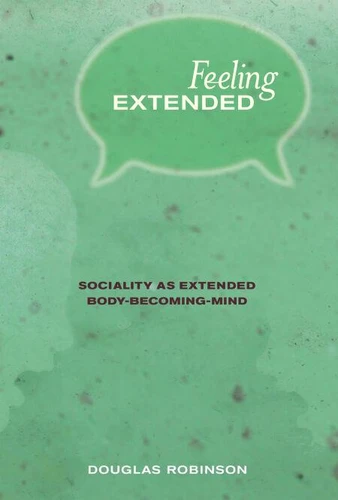
Feeling Extended. Sociality as Extended Body-Becoming-Mind
Par :Formats :
Disponible dans votre compte client Decitre ou Furet du Nord dès validation de votre commande. Le format ePub protégé est :
- Compatible avec une lecture sur My Vivlio (smartphone, tablette, ordinateur)
- Compatible avec une lecture sur liseuses Vivlio
- Pour les liseuses autres que Vivlio, vous devez utiliser le logiciel Adobe Digital Edition. Non compatible avec la lecture sur les liseuses Kindle, Remarkable et Sony
- Non compatible avec un achat hors France métropolitaine
 , qui est-ce ?
Notre partenaire de plateforme de lecture numérique où vous retrouverez l'ensemble de vos ebooks gratuitement
Pour en savoir plus sur nos ebooks, consultez notre aide en ligne ici
C'est si simple ! Lisez votre ebook avec l'app Vivlio sur votre tablette, mobile ou ordinateur :

- Nombre de pages264
- FormatePub
- ISBN978-0-262-31491-6
- EAN9780262314916
- Date de parution16/08/2013
- Protection num.Adobe DRM
- Taille335 Ko
- Infos supplémentairesepub
- ÉditeurThe MIT Press
Résumé
A new view of the extended mind thesis argues that a stark binary opposition between really extending and seeming to extend oversimplifies the issue. The extended-mind thesis (EMT), usually attributed to Andy Clark and David Chalmers, proposes that in specific kinds of mind-body-world interaction there emerges an extended cognitive system incorporating such extracranial supports as pencils, papers, computers, and other objects and environments in the world.
In Feeling Extended, Douglas Robinson accepts the thesis, but argues that the usual debate over EMT-which centers on whether mind really (literally, actually, materially) extends to body and world or only seems to-oversimplifies the issue. When we say that mind feels as if it extends, Robinson argues, what extends is precisely feeling-and mind, insofar as it arises out of feeling. Robinson explores the world of affect and conation as intermediate realms of being between the physical movements of body and the qualitative movements of mind.
He shows that affect is transcranial and tends to become interpersonal conation. Affective-becoming-conative sociality, he argues, is in fact the primary area in which body-becoming-mind extends. To make his case, Robinson draws on a wide spectrum of philosophical thought-from the EMT and qualia debates among cognitivists to the prehistory of such debates in the work of Hegel and Peirce to continental challenges to Hegelianism from Bakhtin and Derrida-as well as on extensive empirical research in social psychology and important sociological theories of face (Goffman), ritual (Connerton), and habitus (Bourdieu).
In Feeling Extended, Douglas Robinson accepts the thesis, but argues that the usual debate over EMT-which centers on whether mind really (literally, actually, materially) extends to body and world or only seems to-oversimplifies the issue. When we say that mind feels as if it extends, Robinson argues, what extends is precisely feeling-and mind, insofar as it arises out of feeling. Robinson explores the world of affect and conation as intermediate realms of being between the physical movements of body and the qualitative movements of mind.
He shows that affect is transcranial and tends to become interpersonal conation. Affective-becoming-conative sociality, he argues, is in fact the primary area in which body-becoming-mind extends. To make his case, Robinson draws on a wide spectrum of philosophical thought-from the EMT and qualia debates among cognitivists to the prehistory of such debates in the work of Hegel and Peirce to continental challenges to Hegelianism from Bakhtin and Derrida-as well as on extensive empirical research in social psychology and important sociological theories of face (Goffman), ritual (Connerton), and habitus (Bourdieu).