SOLDES
Jusqu'à -70% sur une sélection d'articles*

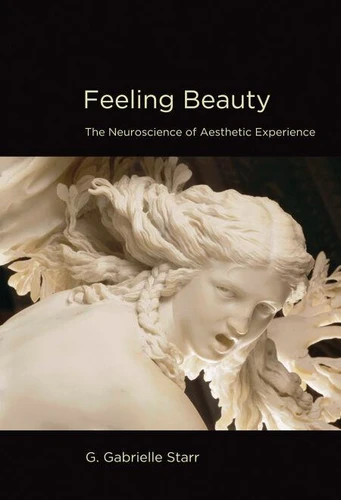
Feeling Beauty. The Neuroscience of Aesthetic Experience
Par :Formats :
Disponible dans votre compte client Decitre ou Furet du Nord dès validation de votre commande. Le format ePub protégé est :
- Compatible avec une lecture sur My Vivlio (smartphone, tablette, ordinateur)
- Compatible avec une lecture sur liseuses Vivlio
- Pour les liseuses autres que Vivlio, vous devez utiliser le logiciel Adobe Digital Edition. Non compatible avec la lecture sur les liseuses Kindle, Remarkable et Sony
- Non compatible avec un achat hors France métropolitaine
 , qui est-ce ?
Notre partenaire de plateforme de lecture numérique où vous retrouverez l'ensemble de vos ebooks gratuitement
Pour en savoir plus sur nos ebooks, consultez notre aide en ligne ici
C'est si simple ! Lisez votre ebook avec l'app Vivlio sur votre tablette, mobile ou ordinateur :

- Nombre de pages280
- FormatePub
- ISBN978-0-262-31545-6
- EAN9780262315456
- Date de parution19/07/2013
- Protection num.Adobe DRM
- Taille8 Mo
- Infos supplémentairesepub
- ÉditeurThe MIT Press
Résumé
A theory of the neural bases of aesthetic experience across the arts, which draws on the tools of both cognitive neuroscience and traditional humanist inquiry. In Feeling Beauty, G. Gabrielle Starr argues that understanding the neural underpinnings of aesthetic experience can reshape our conceptions of aesthetics and the arts. Drawing on the tools of both cognitive neuroscience and traditional humanist inquiry, Starr shows that neuroaesthetics offers a new model for understanding the dynamic and changing features of aesthetic life, the relationships among the arts, and how individual differences in aesthetic judgment shape the varieties of aesthetic experience.
Starr, a scholar of the humanities and a researcher in the neuroscience of aesthetics, proposes that aesthetic experience relies on a distributed neural architecture-a set of brain areas involved in emotion, perception, imagery, memory, and language. More important, it emerges from networked interactions, intricately connected and coordinated brain systems that together form a flexible architecture enabling us to develop new arts and to see the world around us differently.
Focusing on the "sister arts" of poetry, painting, and music, Starr builds and tests a neural model of aesthetic experience valid across all the arts. Asking why works that address different senses using different means seem to produce the same set of feelings, she examines particular works of art in a range of media, including a poem by Keats, a painting by van Gogh, a sculpture by Bernini, and Beethoven's Diabelli Variations.
Starr's innovative, interdisciplinary analysis is true to the complexities of both the physical instantiation of aesthetics and the realities of artistic representation.
Starr, a scholar of the humanities and a researcher in the neuroscience of aesthetics, proposes that aesthetic experience relies on a distributed neural architecture-a set of brain areas involved in emotion, perception, imagery, memory, and language. More important, it emerges from networked interactions, intricately connected and coordinated brain systems that together form a flexible architecture enabling us to develop new arts and to see the world around us differently.
Focusing on the "sister arts" of poetry, painting, and music, Starr builds and tests a neural model of aesthetic experience valid across all the arts. Asking why works that address different senses using different means seem to produce the same set of feelings, she examines particular works of art in a range of media, including a poem by Keats, a painting by van Gogh, a sculpture by Bernini, and Beethoven's Diabelli Variations.
Starr's innovative, interdisciplinary analysis is true to the complexities of both the physical instantiation of aesthetics and the realities of artistic representation.