SOLDES
Jusqu'à -70% sur une sélection d'articles*

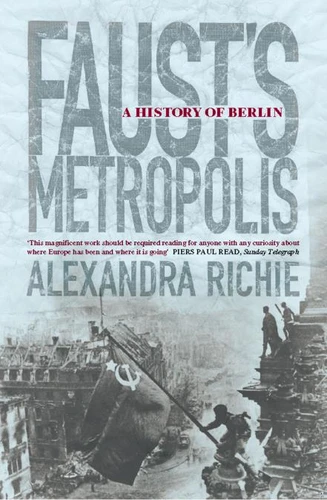
Faust’s Metropolis. A History of Berlin
Par :Formats :
Disponible dans votre compte client Decitre ou Furet du Nord dès validation de votre commande. Le format ePub protégé est :
- Compatible avec une lecture sur My Vivlio (smartphone, tablette, ordinateur)
- Compatible avec une lecture sur liseuses Vivlio
- Pour les liseuses autres que Vivlio, vous devez utiliser le logiciel Adobe Digital Edition. Non compatible avec la lecture sur les liseuses Kindle, Remarkable et Sony
- Non compatible avec un achat hors France métropolitaine
 , qui est-ce ?
Notre partenaire de plateforme de lecture numérique où vous retrouverez l'ensemble de vos ebooks gratuitement
Pour en savoir plus sur nos ebooks, consultez notre aide en ligne ici
C'est si simple ! Lisez votre ebook avec l'app Vivlio sur votre tablette, mobile ou ordinateur :

- Nombre de pages1024
- FormatePub
- ISBN978-0-00-745549-2
- EAN9780007455492
- Date de parution10/10/2013
- Protection num.Adobe DRM
- Infos supplémentairesepub
- ÉditeurWilliam Collins
Résumé
A radical and exciting history of a city - its culture, its people and its politics - that refreshes our image of Europe's past and of the writing of history itself.
In Berlin, history is tangible. The sense of the past - of Europe, of Germany, and in particular of the twentieth century with its myths, depravities, idealism and horror - hangs in the air around the old Hinterhofs and deserted railway stations.
No other city has played such a part in the tides of twentieth-century European affairs. Faust's Metropolis is a rich and inspiring history of this city, a breathtaking portrait of its people and a thorough evaluation of its achievements and errors. From the revolutionary fervour of its teeming slums, the insufferable pomp of Imperial Berlin, and the frantic modernism of Weimar to the brutality of the Nazis and the symbolic defeat of communism as the Wall came down, Berlin has played host to all the movements that have uplifted and afflicted German and European history.
Alexandra Richie writes superbly of its role as a crucible of change. Full of humour and with an inimitable personal view of the modern capital of reunited Germany, Faust's Metropolis also offers a scholarly, thematic analysis of the ways in which the city has reinvented itself through the ages, the tensions which historically existed between Berliners and other Germans, the crucial role which Berlin has played in shaping the political and cultural life of Europe.
In drawing together the complex strands of its actual and imagined past, Alexandra Richie reveals herself as an extraordinary new talent in her field.
No other city has played such a part in the tides of twentieth-century European affairs. Faust's Metropolis is a rich and inspiring history of this city, a breathtaking portrait of its people and a thorough evaluation of its achievements and errors. From the revolutionary fervour of its teeming slums, the insufferable pomp of Imperial Berlin, and the frantic modernism of Weimar to the brutality of the Nazis and the symbolic defeat of communism as the Wall came down, Berlin has played host to all the movements that have uplifted and afflicted German and European history.
Alexandra Richie writes superbly of its role as a crucible of change. Full of humour and with an inimitable personal view of the modern capital of reunited Germany, Faust's Metropolis also offers a scholarly, thematic analysis of the ways in which the city has reinvented itself through the ages, the tensions which historically existed between Berliners and other Germans, the crucial role which Berlin has played in shaping the political and cultural life of Europe.
In drawing together the complex strands of its actual and imagined past, Alexandra Richie reveals herself as an extraordinary new talent in her field.