
Nouveauté
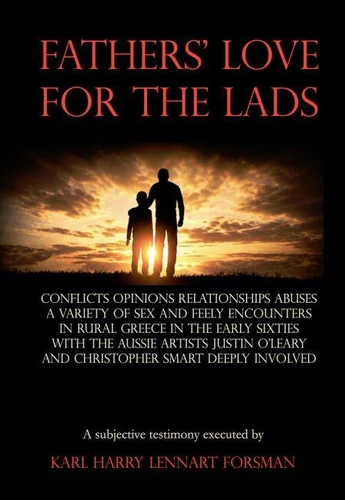
Fathers' Love for the Lads
Par :Formats :
Disponible dans votre compte client Decitre ou Furet du Nord dès validation de votre commande. Le format ePub est :
- Compatible avec une lecture sur My Vivlio (smartphone, tablette, ordinateur)
- Compatible avec une lecture sur liseuses Vivlio
- Pour les liseuses autres que Vivlio, vous devez utiliser le logiciel Adobe Digital Edition. Non compatible avec la lecture sur les liseuses Kindle, Remarkable et Sony
 , qui est-ce ?
Notre partenaire de plateforme de lecture numérique où vous retrouverez l'ensemble de vos ebooks gratuitement
Pour en savoir plus sur nos ebooks, consultez notre aide en ligne ici
C'est si simple ! Lisez votre ebook avec l'app Vivlio sur votre tablette, mobile ou ordinateur :

- FormatePub
- ISBN8235924734
- EAN9798235924734
- Date de parution21/08/2026
- Protection num.pas de protection
- Infos supplémentairesepub
- ÉditeurIoakim Ioakim
Résumé
Not until the end of this book will you meet a father showing he loves his son. Until then, the fathers' love may appear as a projection or a delusion in the background of the protagonists' mindsThe many scenes are set in rural Greece in the early 1960s, when two artists in their early forties settle on an extremely isolated island for half a year. They are enthralled by a North European youth. conduct.
The now-famous sexual revolution of the sixties influenced both visitors and locals, in different ways; some unwittingly profited from its new dogma of 'everything goes'. Old-fashioned 'homosexuality' was still illegal in culturally and socially backward cultures like the UK. The issue of 'love' between men, or, God forbid, between a man and a younger individual, was unthinkable to even mention, but not so in the isolated rural world that was recently part of the Ottoman Empire.
The protagonists had to deal with a couple of striking happenings and attempts to come to terms with unique emotions. It may be recognised in tight quarters that much individual and disturbing human behaviour may stem from early, unknown incidents with parents and that a lack of paternal love may leave an individual struggling with old, unmet inborn needs. This subjective and literary 'testimony' reports what happened and does not present analyses, except for those that may have been performed in vivo by the main protagonist.
Although far from God's best child, he expresses strong views on most aspects of human practice. He never forgets to let others know the straight and valid facts in a world run by beliefs and habits he would see as unwanted, immoral, or even against some law.
The now-famous sexual revolution of the sixties influenced both visitors and locals, in different ways; some unwittingly profited from its new dogma of 'everything goes'. Old-fashioned 'homosexuality' was still illegal in culturally and socially backward cultures like the UK. The issue of 'love' between men, or, God forbid, between a man and a younger individual, was unthinkable to even mention, but not so in the isolated rural world that was recently part of the Ottoman Empire.
The protagonists had to deal with a couple of striking happenings and attempts to come to terms with unique emotions. It may be recognised in tight quarters that much individual and disturbing human behaviour may stem from early, unknown incidents with parents and that a lack of paternal love may leave an individual struggling with old, unmet inborn needs. This subjective and literary 'testimony' reports what happened and does not present analyses, except for those that may have been performed in vivo by the main protagonist.
Although far from God's best child, he expresses strong views on most aspects of human practice. He never forgets to let others know the straight and valid facts in a world run by beliefs and habits he would see as unwanted, immoral, or even against some law.