SOLDES
Jusqu'à -70% sur une sélection d'articles*

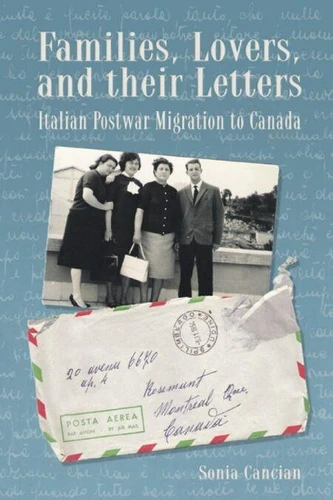
Families, Lovers, and their Letters. Italian Postwar Migration to Canada
Par :Formats :
Disponible dans votre compte client Decitre ou Furet du Nord dès validation de votre commande. Le format ePub est :
- Compatible avec une lecture sur My Vivlio (smartphone, tablette, ordinateur)
- Compatible avec une lecture sur liseuses Vivlio
- Pour les liseuses autres que Vivlio, vous devez utiliser le logiciel Adobe Digital Edition. Non compatible avec la lecture sur les liseuses Kindle, Remarkable et Sony
 , qui est-ce ?
Notre partenaire de plateforme de lecture numérique où vous retrouverez l'ensemble de vos ebooks gratuitement
Pour en savoir plus sur nos ebooks, consultez notre aide en ligne ici
C'est si simple ! Lisez votre ebook avec l'app Vivlio sur votre tablette, mobile ou ordinateur :

- Nombre de pages192
- FormatePub
- ISBN978-0-88755-006-5
- EAN9780887550065
- Date de parution01/05/2010
- Protection num.Digital Watermarking
- Taille2 Mo
- Infos supplémentairesepub
- ÉditeurUniversity of Manitoba Press
Résumé
Families, Lovers, and their Letters takes us into the passionate hearts and minds of ordinary people caught in the heartbreak of transatlantic migration. It examines the experiences of Italian migrants to Canada and their loved ones left behind in Italy following the Second World War, when the largest migration of Italians to Canada took place. In a micro-analysis of 400 private letters, including three collections that incorporate letters from both sides of the Atlantic, Sonia Cancian provides new evidence on the bidirectional flow of communication during migration.
She analyzes how kinship networks functioned as a means of support and control through the flow of news, objects, and persons; how gender roles in productive and reproductive spheres were reinforced as a means of coping with separation; and how the emotional impact of both temporary and permanent separation was expressed during the migration process. Cancian also examines the love letter as a specific form of epistolary exchange, a first in Italian immigrant historiography, revealing the powerful effect that romantic love had on the migration experience.
She analyzes how kinship networks functioned as a means of support and control through the flow of news, objects, and persons; how gender roles in productive and reproductive spheres were reinforced as a means of coping with separation; and how the emotional impact of both temporary and permanent separation was expressed during the migration process. Cancian also examines the love letter as a specific form of epistolary exchange, a first in Italian immigrant historiography, revealing the powerful effect that romantic love had on the migration experience.