SOLDES
Jusqu'à -70% sur une sélection d'articles*

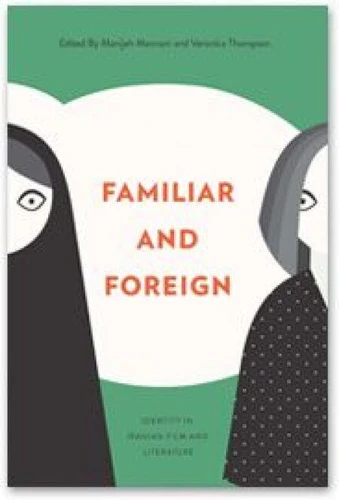
Familiar and Foreign. Identity in Iranian Film and Literature
Par : ,Formats :
Disponible dans votre compte client Decitre ou Furet du Nord dès validation de votre commande. Le format ePub est :
- Compatible avec une lecture sur My Vivlio (smartphone, tablette, ordinateur)
- Compatible avec une lecture sur liseuses Vivlio
- Pour les liseuses autres que Vivlio, vous devez utiliser le logiciel Adobe Digital Edition. Non compatible avec la lecture sur les liseuses Kindle, Remarkable et Sony
 , qui est-ce ?
Notre partenaire de plateforme de lecture numérique où vous retrouverez l'ensemble de vos ebooks gratuitement
Pour en savoir plus sur nos ebooks, consultez notre aide en ligne ici
C'est si simple ! Lisez votre ebook avec l'app Vivlio sur votre tablette, mobile ou ordinateur :

- Nombre de pages272
- FormatePub
- ISBN978-1-927356-88-3
- EAN9781927356883
- Date de parution30/09/2015
- Protection num.Digital Watermarking
- Taille3 Mo
- Infos supplémentairesepub
- ÉditeurAU Press
Résumé
The current political climate of confrontation between Islamist regimes and Western governments has resulted in the proliferation of essentialist perceptions of Iran and Iranians in the West. Such perceptions do not reflect the complex evolution of Iranian identity that occurred in the years following the Constitutional Revolution (1906-11) and the anti-imperialist Islamic Revolution of 1979. Despite the Iranian government's determined pursuance of anti-Western policies and strict conformity to religious principles, the film and literature of Iran reflect the clash between a nostalgic pride in Persian tradition and an apparent infatuation with a more Eurocentric modernity.
In Familiar and Foreign, Mannani and Thompson set out to explore the tensions surrounding the ongoing formulation of Iranian identity by bringing together essays on poetry, novels, memoir, and films. These include both canonical and less widely theorized texts, as well as works of literature written in English by authors living in diaspora. Challenging neocolonialist stereotypes, these critical excursions into Iranian literature and film reveal the limitations of collective identity as it has been configured within and outside of Iran.
Through the examination of works by, among others, the iconic female poet Forugh Farrokhzad, the expatriate author Goli Taraqqi, the controversial memoirist Azar Nafisi, and the graphic novelist Marjane Satrapi, author of Persepolis, this volume engages with the complex and contested discourses of religion, patriarchy, and politics that are the contemporary product of Iran's long and revolutionary history.
In Familiar and Foreign, Mannani and Thompson set out to explore the tensions surrounding the ongoing formulation of Iranian identity by bringing together essays on poetry, novels, memoir, and films. These include both canonical and less widely theorized texts, as well as works of literature written in English by authors living in diaspora. Challenging neocolonialist stereotypes, these critical excursions into Iranian literature and film reveal the limitations of collective identity as it has been configured within and outside of Iran.
Through the examination of works by, among others, the iconic female poet Forugh Farrokhzad, the expatriate author Goli Taraqqi, the controversial memoirist Azar Nafisi, and the graphic novelist Marjane Satrapi, author of Persepolis, this volume engages with the complex and contested discourses of religion, patriarchy, and politics that are the contemporary product of Iran's long and revolutionary history.