SOLDES
Jusqu'à -70% sur une sélection d'articles*

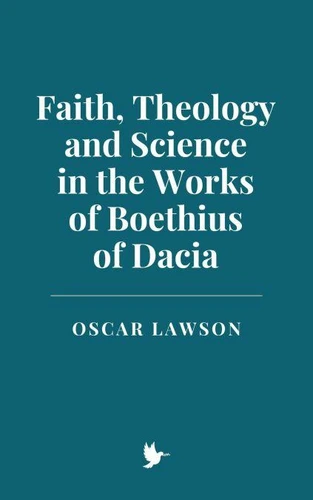
Faith, Theology and Science in the Works of Boethius of Dacia
Par :Formats :
Disponible dans votre compte client Decitre ou Furet du Nord dès validation de votre commande. Le format ePub est :
- Compatible avec une lecture sur My Vivlio (smartphone, tablette, ordinateur)
- Compatible avec une lecture sur liseuses Vivlio
- Pour les liseuses autres que Vivlio, vous devez utiliser le logiciel Adobe Digital Edition. Non compatible avec la lecture sur les liseuses Kindle, Remarkable et Sony
 , qui est-ce ?
Notre partenaire de plateforme de lecture numérique où vous retrouverez l'ensemble de vos ebooks gratuitement
Pour en savoir plus sur nos ebooks, consultez notre aide en ligne ici
C'est si simple ! Lisez votre ebook avec l'app Vivlio sur votre tablette, mobile ou ordinateur :

- FormatePub
- ISBN8227267993
- EAN9798227267993
- Date de parution11/01/2025
- Protection num.pas de protection
- Infos supplémentairesepub
- ÉditeurBig Dog Books, LLC
Résumé
This work explores the intellectual contributions of Boethius of Dacia, a significant but often overlooked philosopher of the medieval scholastic tradition. Focusing on his distinctive approach to the relationship between philosophy and theology, the study examines how Boethius advocated for the autonomy of natural philosophy while maintaining the primacy of theology in matters of divine revelation.
Through an in-depth analysis of Boethius's key texts, including De Aeternitate Mundi, Quaestiones Naturales, and De Summo Bono, this work highlights his critical role in shaping the medieval intellectual environment, where philosophy was gradually delineated as an independent domain of reason and empirical inquiry. The paper also traces Boethius's influence on later scholastics like Thomas Aquinas, John Duns Scotus, and William of Ockham, who further developed his ideas, and how his thought paved the way for later scientific advancements.
By emphasizing the separation of philosophical and theological inquiry, Boethius helped define intellectual frameworks that continue to inform modern discussions on the relationship between science, faith, and reason. The study argues that Boethius's work remains relevant today, offering a timeless model for integrating philosophical rigor with religious reflection in the quest for truth.
Through an in-depth analysis of Boethius's key texts, including De Aeternitate Mundi, Quaestiones Naturales, and De Summo Bono, this work highlights his critical role in shaping the medieval intellectual environment, where philosophy was gradually delineated as an independent domain of reason and empirical inquiry. The paper also traces Boethius's influence on later scholastics like Thomas Aquinas, John Duns Scotus, and William of Ockham, who further developed his ideas, and how his thought paved the way for later scientific advancements.
By emphasizing the separation of philosophical and theological inquiry, Boethius helped define intellectual frameworks that continue to inform modern discussions on the relationship between science, faith, and reason. The study argues that Boethius's work remains relevant today, offering a timeless model for integrating philosophical rigor with religious reflection in the quest for truth.
A propos de Oscar Lawson





2,99 €