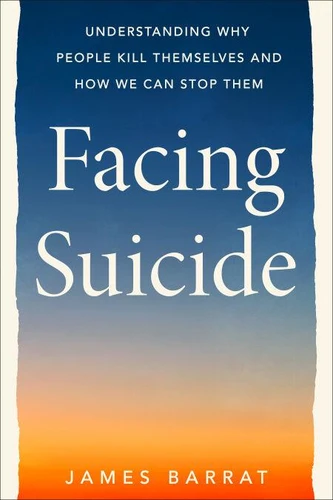
Facing Suicide. Understanding Why People Kill Themselves and How We Can Stop Them
Par :Formats :
Disponible dans votre compte client Decitre ou Furet du Nord dès validation de votre commande. Le format ePub protégé est :
- Compatible avec une lecture sur My Vivlio (smartphone, tablette, ordinateur)
- Compatible avec une lecture sur liseuses Vivlio
- Pour les liseuses autres que Vivlio, vous devez utiliser le logiciel Adobe Digital Edition. Non compatible avec la lecture sur les liseuses Kindle, Remarkable et Sony
- Non compatible avec un achat hors France métropolitaine
 , qui est-ce ?
Notre partenaire de plateforme de lecture numérique où vous retrouverez l'ensemble de vos ebooks gratuitement
Pour en savoir plus sur nos ebooks, consultez notre aide en ligne ici
C'est si simple ! Lisez votre ebook avec l'app Vivlio sur votre tablette, mobile ou ordinateur :

- Nombre de pages288
- FormatePub
- ISBN978-0-593-53916-3
- EAN9780593539163
- Date de parution03/09/2024
- Protection num.Adobe DRM
- Taille2 Mo
- Infos supplémentairesepub
- ÉditeurAvery
Résumé
A deep dive into a national catastrophe that examines how and why suicide happens so that we can prevent itSuicide has reached epidemic proportions in America, claiming over 45, 000 lives each year-more than car accidents or homicides. For every person who dies there are about 10 unsuccessful attempts. Yet suicides are preventable, if we can grasp the complex factors behind it and look out for suicide's signs in our families, communities, and colleagues.
In this groundbreaking book, acclaimed journalist James Barrat delivers these insights with a deep dive into America's suicide crisis. With profiles of survivors and their families, and interviews with experts, Barrat assembles a thorough, nuanced portrait of this confounding killer. He examines suicide's many risk factors, including genetics, substance abuse, access to lethal means, and mental health.
Importantly, he explores how societal issues like racial trauma, bullying, and financial stress - in combination with other factors - can push people to kill themselves. Barrat reveals the structural and chemical differences found in suicidal brains, providing biological insights. Facing Suicide celebrates solutions. Barrat shows how the US Air Force and the nation of Denmark lowered suicide rates with comprehensive 'systems approaches' that enlist every member of society in impactful interventions.
Importantly, Barrat finds that 100% of the people he interviewed who attempted suicide are happy they got help and are alive today. Their message is one of healing and hope. With deep reporting and keen insights, Facing Suicide sheds essential light on this painful, growing crises with actionable information about preventing suicides. Barrat's urgent book makes clear that understanding and preventing suicide must be a national priority.
We all have a role to play in this vital effort.
In this groundbreaking book, acclaimed journalist James Barrat delivers these insights with a deep dive into America's suicide crisis. With profiles of survivors and their families, and interviews with experts, Barrat assembles a thorough, nuanced portrait of this confounding killer. He examines suicide's many risk factors, including genetics, substance abuse, access to lethal means, and mental health.
Importantly, he explores how societal issues like racial trauma, bullying, and financial stress - in combination with other factors - can push people to kill themselves. Barrat reveals the structural and chemical differences found in suicidal brains, providing biological insights. Facing Suicide celebrates solutions. Barrat shows how the US Air Force and the nation of Denmark lowered suicide rates with comprehensive 'systems approaches' that enlist every member of society in impactful interventions.
Importantly, Barrat finds that 100% of the people he interviewed who attempted suicide are happy they got help and are alive today. Their message is one of healing and hope. With deep reporting and keen insights, Facing Suicide sheds essential light on this painful, growing crises with actionable information about preventing suicides. Barrat's urgent book makes clear that understanding and preventing suicide must be a national priority.
We all have a role to play in this vital effort.