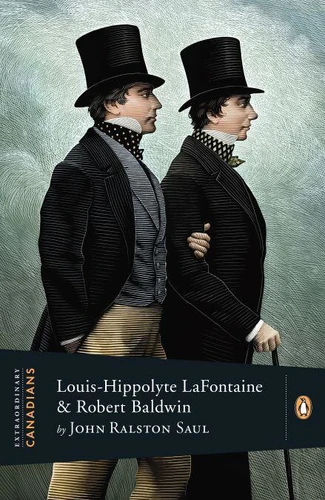
Extraordinary Canadians: Louis Hippolyte Lafontaine and Robert
Par :Formats :
Disponible dans votre compte client Decitre ou Furet du Nord dès validation de votre commande. Le format ePub protégé est :
- Compatible avec une lecture sur My Vivlio (smartphone, tablette, ordinateur)
- Compatible avec une lecture sur liseuses Vivlio
- Pour les liseuses autres que Vivlio, vous devez utiliser le logiciel Adobe Digital Edition. Non compatible avec la lecture sur les liseuses Kindle, Remarkable et Sony
- Non compatible avec un achat hors France métropolitaine
 , qui est-ce ?
Notre partenaire de plateforme de lecture numérique où vous retrouverez l'ensemble de vos ebooks gratuitement
Pour en savoir plus sur nos ebooks, consultez notre aide en ligne ici
C'est si simple ! Lisez votre ebook avec l'app Vivlio sur votre tablette, mobile ou ordinateur :

- Nombre de pages272
- FormatePub
- ISBN978-0-14-317874-3
- EAN9780143178743
- Date de parution05/10/2010
- Protection num.Adobe DRM
- Taille192 Ko
- Infos supplémentairesepub
- ÉditeurPenguin Canada
Résumé
Canada has no better interpreter than prolific writer and thinker John Ralston Saul. Here he argues that Canada did not begin in 1867; indeed, its foundation was laid by two visionary men, Louis-Hippolyte LaFontaine and Robert Baldwin. The two leaders of Lower and Upper Canada, respectively, worked together after the 1841 Union to lead a reformist movement for responsible government run by elected citizens instead of a colonial governor.
But it was during the "Great Ministry" of 1848-51 that the two politicians implemented laws that created a more equitable country. They revamped judicial institutions, created a public education system, made bilingualism official, designed a network of public roads, began a public postal system, and reformed municipal governance. Faced with opposition, and even violence, the two men- polar opposites in temperament-united behind a set of principles and programs that formed modern Canada.
Writing with verve and deep conviction, Saul restores these two extraordinary Canadians to rightful prominence.
But it was during the "Great Ministry" of 1848-51 that the two politicians implemented laws that created a more equitable country. They revamped judicial institutions, created a public education system, made bilingualism official, designed a network of public roads, began a public postal system, and reformed municipal governance. Faced with opposition, and even violence, the two men- polar opposites in temperament-united behind a set of principles and programs that formed modern Canada.
Writing with verve and deep conviction, Saul restores these two extraordinary Canadians to rightful prominence.
A propos de John Ralston Saul


15,70 €
19,62 €

16,68 €