When nuclear deterrence collapses, war does not end. It spreads. A field archivist moves through the remains of a world whose alliances, governments, cities, and moral limits are steadily disintegrating. Nuclear command systems have become unreliable. Former allies turn their weapons on one another. Armed groups inherit the streets. Countries survive as flags, checkpoints, supply routes, and fragments of administrative memory.
As violence becomes infrastructure, survival is measured through usefulness. Hospitals prioritize those who can return to production. Towns are abandoned through logistical calculation. War absorbs industry, language, education, and even compassion until extermination ceases to be an event and becomes the organizing principle of civilization. The narrator continues recording: ruined corridors, emptied cities, broken institutions, and the quiet conversion of human beings into resources or waste.
His archive may reach no court, government, or future reader. He preserves it anyway. Extermination is a bleak work of dystopian and post-apocalyptic fiction about industrialized war, institutional collapse, and a species learning to live inside its own destruction.
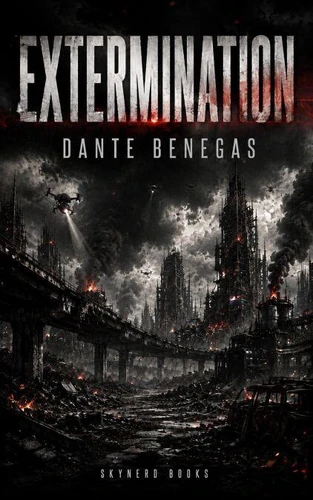
When nuclear deterrence collapses, war does not end. It spreads. A field archivist moves through the remains of a world whose alliances, governments, cities, and moral limits are steadily disintegrating. Nuclear command systems have become unreliable. Former allies turn their weapons on one another. Armed groups inherit the streets. Countries survive as flags, checkpoints, supply routes, and fragments of administrative memory.
As violence becomes infrastructure, survival is measured through usefulness. Hospitals prioritize those who can return to production. Towns are abandoned through logistical calculation. War absorbs industry, language, education, and even compassion until extermination ceases to be an event and becomes the organizing principle of civilization. The narrator continues recording: ruined corridors, emptied cities, broken institutions, and the quiet conversion of human beings into resources or waste.
His archive may reach no court, government, or future reader. He preserves it anyway. Extermination is a bleak work of dystopian and post-apocalyptic fiction about industrialized war, institutional collapse, and a species learning to live inside its own destruction.


 , qui est-ce ?