SOLDES
Jusqu'à -70% sur une sélection d'articles*

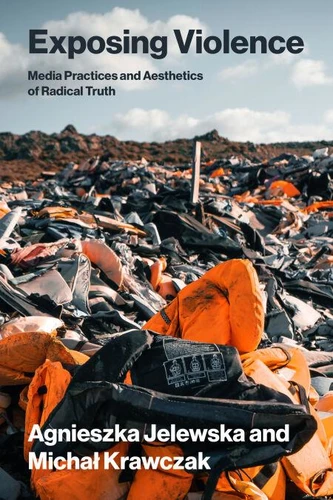
Exposing Violence. Media Practices and Aesthetics of Radical Truth
Par : ,Formats :
Disponible dans votre compte client Decitre ou Furet du Nord dès validation de votre commande. Le format ePub protégé est :
- Compatible avec une lecture sur My Vivlio (smartphone, tablette, ordinateur)
- Compatible avec une lecture sur liseuses Vivlio
- Pour les liseuses autres que Vivlio, vous devez utiliser le logiciel Adobe Digital Edition. Non compatible avec la lecture sur les liseuses Kindle, Remarkable et Sony
- Non compatible avec un achat hors France métropolitaine
 , qui est-ce ?
Notre partenaire de plateforme de lecture numérique où vous retrouverez l'ensemble de vos ebooks gratuitement
Pour en savoir plus sur nos ebooks, consultez notre aide en ligne ici
C'est si simple ! Lisez votre ebook avec l'app Vivlio sur votre tablette, mobile ou ordinateur :

- Nombre de pages268
- FormatePub
- ISBN978-0-262-05347-1
- EAN9780262053471
- Date de parution31/03/2026
- Protection num.Adobe DRM
- Taille4 Mo
- Infos supplémentairesepub
- ÉditeurThe MIT Press
Résumé
How small groups and grassroots collectives can act for justice and leverage contemporary media to document violence. Exposing Violence gathers, for the first time, new tendencies in contemporary media practices that engage in exposing the violence inflicted upon human beings and the environment. It focuses on projects that emerged in the second and third decades of the twenty-first century as forms of socially engaged media activities initiated by independent groups of artists and researchers, interdisciplinary teams emerging at universities, and small laboratory groups.
Agnieszka Jelewska and Michal Krawczak propose an original analytical concept, the aesthetics of radical truth (AeRT), as a modus operandi to understand the specific nature of these projects situated at the intersection of art, science, activism, and engaged journalism. Their primary goal is the development of experimental, innovative, and collective forms of recording, revealing, tracing, identifying, and critically analyzing various manifestations of violence.
The book outlines the beginning of recent developments within "open justice, " including the creation of new digital archives and platforms that gather data on violence, interactive environments that facilitate new understanding through the emotional experience of evidence, and tools produced from the grass roots that allow for the tracking and disclosure of violence. The authors also highlight strategies for resisting violence in a media-dense environment.
Agnieszka Jelewska and Michal Krawczak propose an original analytical concept, the aesthetics of radical truth (AeRT), as a modus operandi to understand the specific nature of these projects situated at the intersection of art, science, activism, and engaged journalism. Their primary goal is the development of experimental, innovative, and collective forms of recording, revealing, tracing, identifying, and critically analyzing various manifestations of violence.
The book outlines the beginning of recent developments within "open justice, " including the creation of new digital archives and platforms that gather data on violence, interactive environments that facilitate new understanding through the emotional experience of evidence, and tools produced from the grass roots that allow for the tracking and disclosure of violence. The authors also highlight strategies for resisting violence in a media-dense environment.