SOLDES
Jusqu'à -70% sur une sélection d'articles*

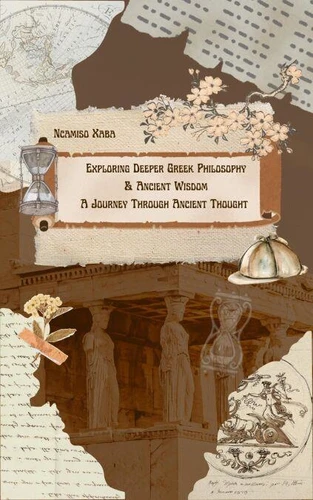
Exploring Deeper Greek Philosophy & Ancient Wisdom:A Journey Through Ancient Thought. Philosophy, #1
Par :Formats :
Disponible dans votre compte client Decitre ou Furet du Nord dès validation de votre commande. Le format ePub est :
- Compatible avec une lecture sur My Vivlio (smartphone, tablette, ordinateur)
- Compatible avec une lecture sur liseuses Vivlio
- Pour les liseuses autres que Vivlio, vous devez utiliser le logiciel Adobe Digital Edition. Non compatible avec la lecture sur les liseuses Kindle, Remarkable et Sony
 , qui est-ce ?
Notre partenaire de plateforme de lecture numérique où vous retrouverez l'ensemble de vos ebooks gratuitement
Pour en savoir plus sur nos ebooks, consultez notre aide en ligne ici
C'est si simple ! Lisez votre ebook avec l'app Vivlio sur votre tablette, mobile ou ordinateur :

- FormatePub
- ISBN8233792045
- EAN9798233792045
- Date de parution15/02/2026
- Protection num.pas de protection
- Infos supplémentairesepub
- ÉditeurLinda Balsamo
Résumé
In the sixth century before the common era, on the western coast of Asia Minor, something extraordinary occurred, a revolution of the mind that would shape the trajectory of human civilization for millennia to come. For the first time in recorded history, thinkers began to seek explanations for the natural world not in the caprices of gods or the dictates of myth, but in rational principles accessible to human reason.
This was the birth of philosophy, and it took place in Miletus, a prosperous trading city on the Ionian coast. The Milesians, Thales, Anaximander, and Anaximenes, were the first to ask what we might call "scientific" questions, though their methods differed vastly from modern science. They sought the arche, the fundamental principle or substance underlying all of reality. What drove these men to look beyond the comfortable narratives of Homer and Hesiod? Perhaps it was the cosmopolitan nature of Miletus itself, a city at the crossroads of civilizations, where Greek, Egyptian, Babylonian, and Persian ideas mingled freely.
In such an environment, the provincial certainties of any single mythological tradition could not hold. The importance of this intellectual revolution cannot be overstated. Before the Milesians, the Greeks, like all ancient peoples, explained natural phenomena through mythology. Thunder was the weapon of Zeus; earthquakes were Poseidon's fury; the seasons turned because Persephone descended to and returned from the underworld.
These narratives were beautiful, emotionally satisfying, and culturally binding, but they were not explanations in any philosophical or scientific sense.
This was the birth of philosophy, and it took place in Miletus, a prosperous trading city on the Ionian coast. The Milesians, Thales, Anaximander, and Anaximenes, were the first to ask what we might call "scientific" questions, though their methods differed vastly from modern science. They sought the arche, the fundamental principle or substance underlying all of reality. What drove these men to look beyond the comfortable narratives of Homer and Hesiod? Perhaps it was the cosmopolitan nature of Miletus itself, a city at the crossroads of civilizations, where Greek, Egyptian, Babylonian, and Persian ideas mingled freely.
In such an environment, the provincial certainties of any single mythological tradition could not hold. The importance of this intellectual revolution cannot be overstated. Before the Milesians, the Greeks, like all ancient peoples, explained natural phenomena through mythology. Thunder was the weapon of Zeus; earthquakes were Poseidon's fury; the seasons turned because Persephone descended to and returned from the underworld.
These narratives were beautiful, emotionally satisfying, and culturally binding, but they were not explanations in any philosophical or scientific sense.