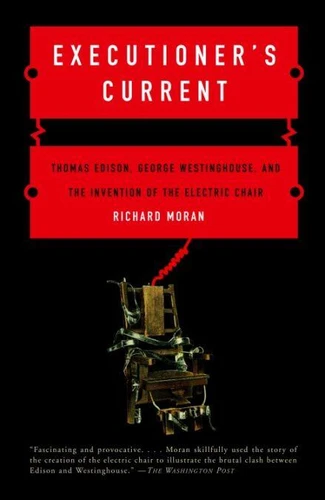
Executioner's Current. Thomas Edison, George Westinghouse, and the Invention of the Electric Chair
Par :Formats :
Disponible dans votre compte client Decitre ou Furet du Nord dès validation de votre commande. Le format ePub protégé est :
- Compatible avec une lecture sur My Vivlio (smartphone, tablette, ordinateur)
- Compatible avec une lecture sur liseuses Vivlio
- Pour les liseuses autres que Vivlio, vous devez utiliser le logiciel Adobe Digital Edition. Non compatible avec la lecture sur les liseuses Kindle, Remarkable et Sony
- Non compatible avec un achat hors France métropolitaine
 , qui est-ce ?
Notre partenaire de plateforme de lecture numérique où vous retrouverez l'ensemble de vos ebooks gratuitement
Pour en savoir plus sur nos ebooks, consultez notre aide en ligne ici
C'est si simple ! Lisez votre ebook avec l'app Vivlio sur votre tablette, mobile ou ordinateur :

- Nombre de pages304
- FormatePub
- ISBN978-0-307-42580-5
- EAN9780307425805
- Date de parution18/12/2007
- Protection num.Adobe DRM
- Taille3 Mo
- Infos supplémentairesepub
- ÉditeurVintage
Résumé
A "fascinating and provocative" story (The Washington Post) of high stakes competition between two titans that shows how the electric chair developed through an effort by one nineteenth-century electric company to discredit the other. In 1882, Thomas Edison ushered in the "age of electricity" when he illuminated Manhattan's Pearl Street with his direct current (DC) system. Six years later, George Westinghouse lit up Buffalo with his less expensive alternating current (AC).
The two men quickly became locked in a fierce rivalry, made all the more complicated by a novel new application for their product: the electric chair. When Edison set out to persuade the state of New York to use Westinghouse's current to execute condemned criminals, Westinghouse fought back in court, attempting to stop the first electrocution and keep AC from becoming the "executioner's current." In this meticulously researched account of the ensuing legal battle and the horribly botched first execution, Moran raises disturbing questions not only about electrocution, but about about our society's tendency to rely on new technologies to answer moral questions.
The two men quickly became locked in a fierce rivalry, made all the more complicated by a novel new application for their product: the electric chair. When Edison set out to persuade the state of New York to use Westinghouse's current to execute condemned criminals, Westinghouse fought back in court, attempting to stop the first electrocution and keep AC from becoming the "executioner's current." In this meticulously researched account of the ensuing legal battle and the horribly botched first execution, Moran raises disturbing questions not only about electrocution, but about about our society's tendency to rely on new technologies to answer moral questions.