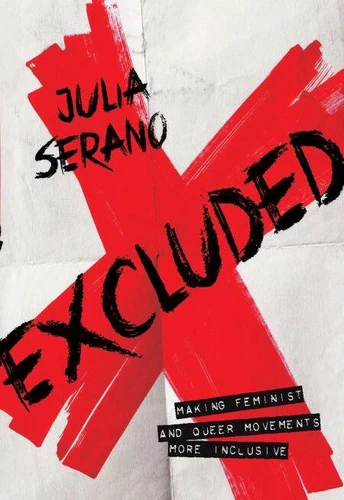
Excluded. Making Feminist and Queer Movements More Inclusive
Par :Formats :
Disponible dans votre compte client Decitre ou Furet du Nord dès validation de votre commande. Le format ePub protégé est :
- Compatible avec une lecture sur My Vivlio (smartphone, tablette, ordinateur)
- Compatible avec une lecture sur liseuses Vivlio
- Pour les liseuses autres que Vivlio, vous devez utiliser le logiciel Adobe Digital Edition. Non compatible avec la lecture sur les liseuses Kindle, Remarkable et Sony
- Non compatible avec un achat hors France métropolitaine
 , qui est-ce ?
Notre partenaire de plateforme de lecture numérique où vous retrouverez l'ensemble de vos ebooks gratuitement
Pour en savoir plus sur nos ebooks, consultez notre aide en ligne ici
C'est si simple ! Lisez votre ebook avec l'app Vivlio sur votre tablette, mobile ou ordinateur :

- Nombre de pages224
- FormatePub
- ISBN978-1-58005-505-5
- EAN9781580055055
- Date de parution30/09/2013
- Protection num.Adobe DRM
- Infos supplémentairesepub
- ÉditeurSeal Press
Résumé
A transformational approach to overcoming the divisions between feminist communities While many feminist and queer movements are designed to challenge sexism, they often simultaneously police gender and sexuality -- sometimes just as fiercely as the straight, male-centric mainstream does. Some feminists vocally condemn other feminists because of how they dress, for their sexual partners or practices, or because they are seen as different and therefore less valued.
Among LGBTQ activists, there is a long history of lesbians and gay men dismissing bisexuals, transgender people, and other gender and sexual minorities. In each case, exclusion is based on the premise that certain ways of being gendered or sexual are more legitimate, natural, or righteous than others. As a trans woman, bisexual, and femme activist, Julia Serano has spent much of the last ten years challenging various forms of exclusion within feminist and queer/LGBTQ movements.
In Excluded, she chronicles many of these instances of exclusion and argues that marginalizing others often stems from a handful of assumptions that are routinely made about gender and sexuality. These false assumptions infect theories, activism, organizations, and communities -- and worse, they enable people to vigorously protest certain forms of sexism while simultaneously ignoring and even perpetuating others.
Serano advocates for a new approach to fighting sexism that avoids these pitfalls and offers new ways of thinking about gender, sexuality, and sexism that foster inclusivity.
Among LGBTQ activists, there is a long history of lesbians and gay men dismissing bisexuals, transgender people, and other gender and sexual minorities. In each case, exclusion is based on the premise that certain ways of being gendered or sexual are more legitimate, natural, or righteous than others. As a trans woman, bisexual, and femme activist, Julia Serano has spent much of the last ten years challenging various forms of exclusion within feminist and queer/LGBTQ movements.
In Excluded, she chronicles many of these instances of exclusion and argues that marginalizing others often stems from a handful of assumptions that are routinely made about gender and sexuality. These false assumptions infect theories, activism, organizations, and communities -- and worse, they enable people to vigorously protest certain forms of sexism while simultaneously ignoring and even perpetuating others.
Serano advocates for a new approach to fighting sexism that avoids these pitfalls and offers new ways of thinking about gender, sexuality, and sexism that foster inclusivity.