
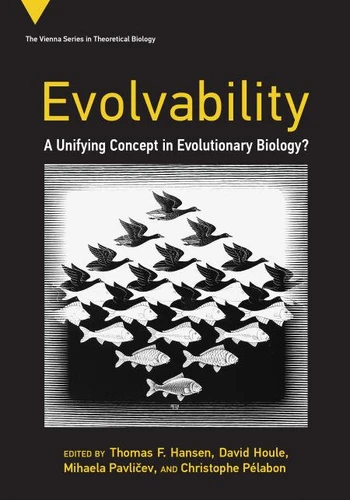
Evolvability. A Unifying Concept in Evolutionary Biology?
Par : , , ,Formats :
Disponible dans votre compte client Decitre ou Furet du Nord dès validation de votre commande. Le format ePub protégé est :
- Compatible avec une lecture sur My Vivlio (smartphone, tablette, ordinateur)
- Compatible avec une lecture sur liseuses Vivlio
- Pour les liseuses autres que Vivlio, vous devez utiliser le logiciel Adobe Digital Edition. Non compatible avec la lecture sur les liseuses Kindle, Remarkable et Sony
- Non compatible avec un achat hors France métropolitaine
 , qui est-ce ?
Notre partenaire de plateforme de lecture numérique où vous retrouverez l'ensemble de vos ebooks gratuitement
Pour en savoir plus sur nos ebooks, consultez notre aide en ligne ici
C'est si simple ! Lisez votre ebook avec l'app Vivlio sur votre tablette, mobile ou ordinateur :

- Nombre de pages406
- FormatePub
- ISBN978-0-262-37470-5
- EAN9780262374705
- Date de parution27/06/2023
- Protection num.Adobe DRM
- Taille24 Mo
- Infos supplémentairesepub
- ÉditeurThe MIT Press
Résumé
Essays on evolvability from the perspectives of quantitative and population genetics, evolutionary developmental biology, systems biology, macroevolution, and the philosophy of science. Evolvability-the capability of organisms to evolve-wasn't recognized as a fundamental concept in evolutionary theory until 1990. Though there is still some debate as to whether it represents a truly new concept, the essays in this volume emphasize its value in enabling new research programs and facilitating communication among the major disciplines in evolutionary biology. The contributors, many of whom were instrumental in the development of the concept of evolvability, synthesize what we have learned about it over the past thirty years.
They focus on the historical and philosophical contexts that influenced the emergence of the concept and suggest ways to develop a common language and theory to drive further evolvability research. The essays, drawn from a workshop on evolvability hosted in 2019-2020 by the Center of Advanced Study at the Norwegian Academy of Science and Letters, in Oslo, provide scientific and historical background on evolvability. The contributors represent different disciplines of evolutionary biology, including quantitative and population genetics, evolutionary developmental biology, systems biology and macroevolution, as well as the philosophy of science.
This pl[urality of approaches allows researchers in disciplines as diverse as developmental biology, molecular biology, and systems biology to communicate with those working in mainstream evolutionary biology. The contributors also discuss key questions at the forefront of research on evolvability. Contributors:J. David Aponte, W. Scott Armbruster, Geir H. Bolstad, Salomé Bourg, Ingo Brigandt, Anne Calof, James M.
Cheverud, Josselin Clo, Frietson Galis, Mark Grabowski, Rebecca Green, Benedikt Hallgrímsson, Thomas F. Hansen, Agnes Holstad, David Houle, David Jablonski, Arthur Lander, Arnaud LeRouzic, Alan C. Love, Ralph Marcucio, Michael B. Morrissey, Laura Nuño de la Rosa, Øystein H. Opedal, Mihaela Pavlicev, Christophe Pélabon, Jane M. Reid, Heather Richbourg, Jacqueline L. Sztepanacz, Masahito Tsuboi, Cristina Villegas, Marta Vidal-García, Kjetil L.
Voje, Andreas Wagner, Günter P. Wagner, Nathan M. Young
They focus on the historical and philosophical contexts that influenced the emergence of the concept and suggest ways to develop a common language and theory to drive further evolvability research. The essays, drawn from a workshop on evolvability hosted in 2019-2020 by the Center of Advanced Study at the Norwegian Academy of Science and Letters, in Oslo, provide scientific and historical background on evolvability. The contributors represent different disciplines of evolutionary biology, including quantitative and population genetics, evolutionary developmental biology, systems biology and macroevolution, as well as the philosophy of science.
This pl[urality of approaches allows researchers in disciplines as diverse as developmental biology, molecular biology, and systems biology to communicate with those working in mainstream evolutionary biology. The contributors also discuss key questions at the forefront of research on evolvability. Contributors:J. David Aponte, W. Scott Armbruster, Geir H. Bolstad, Salomé Bourg, Ingo Brigandt, Anne Calof, James M.
Cheverud, Josselin Clo, Frietson Galis, Mark Grabowski, Rebecca Green, Benedikt Hallgrímsson, Thomas F. Hansen, Agnes Holstad, David Houle, David Jablonski, Arthur Lander, Arnaud LeRouzic, Alan C. Love, Ralph Marcucio, Michael B. Morrissey, Laura Nuño de la Rosa, Øystein H. Opedal, Mihaela Pavlicev, Christophe Pélabon, Jane M. Reid, Heather Richbourg, Jacqueline L. Sztepanacz, Masahito Tsuboi, Cristina Villegas, Marta Vidal-García, Kjetil L.
Voje, Andreas Wagner, Günter P. Wagner, Nathan M. Young