
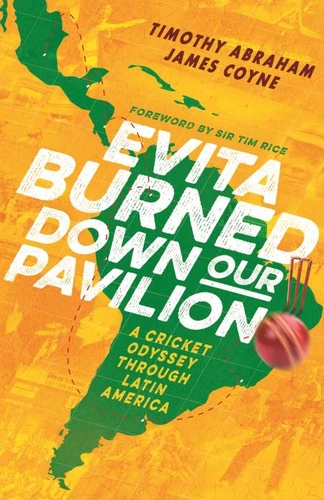
Evita Burned Down Our Pavilion. A Cricket Odyssey through Latin America
Par : ,Formats :
Disponible dans votre compte client Decitre ou Furet du Nord dès validation de votre commande. Le format ePub protégé est :
- Compatible avec une lecture sur My Vivlio (smartphone, tablette, ordinateur)
- Compatible avec une lecture sur liseuses Vivlio
- Pour les liseuses autres que Vivlio, vous devez utiliser le logiciel Adobe Digital Edition. Non compatible avec la lecture sur les liseuses Kindle, Remarkable et Sony
- Non compatible avec un achat hors France métropolitaine
 , qui est-ce ?
Notre partenaire de plateforme de lecture numérique où vous retrouverez l'ensemble de vos ebooks gratuitement
Pour en savoir plus sur nos ebooks, consultez notre aide en ligne ici
C'est si simple ! Lisez votre ebook avec l'app Vivlio sur votre tablette, mobile ou ordinateur :

- Nombre de pages448
- FormatePub
- ISBN978-1-4721-3250-5
- EAN9781472132505
- Date de parution17/06/2020
- Protection num.Adobe DRM
- Infos supplémentairesepub
- ÉditeurConstable
Résumé
'A highly entertaining read, deftly melding social history with sporting memoir and travelogue' Mail on SundayA history of Latin America through cricketCricket was the first sport played in almost every country of the Americas - earlier than football, rugby or baseball. In 1877, when England and Australia played the inaugural Test match at the MCG, Uruguay and Argentina were already ten years into their derby played across the River Plate.
The visionary cricket historian Rowland Bowen said that, during the highpoint of cricket in South America between the two World Wars, the continent could have provided the next Test nation. In Buenos Aires, where British engineers, merchants and meatpackers flocked to make their fortune, the standard of cricket was high: towering figures like Lord Hawke and Plum Warner took star-studded teams of Test cricketers to South America, only to be beaten by Argentina.
A combined Argentine, Brazilian and Chilean team took on the first-class counties in England in 1932. The notion of Brazilians and Mexicans playing T20 at the Maracana or the Azteca today is not as far-fetched as it sounds. But Evita Burned Down Our Pavilion is also a social history of grit, industry and nation-building in the New World. West Indian fruit workers battled yellow fever and brutal management to carve out cricket fields next to the railway lines in Costa Rica.
Cricket was the favoured sport of Chile's Nitrate King. Emperors in Brazil and Mexico used the game to curry favour with Europe. The notorious Pablo Escobar even had a shadowy connection to the game. The fate of cricket in South America was symbolised by Eva Peron ordering the burning down of the Buenos Aires Cricket Club pavilion when the club refused to hand over their premises to her welfare scheme.
Cricket journalists Timothy Abraham and James Coyne take us on a journey to discover this largely untold story of cricket's fate in the world's most colourful continent. Fascinating and surprising, Evita Burned Down Our Pavilion is a valuable addition to cricketing and social history.
The visionary cricket historian Rowland Bowen said that, during the highpoint of cricket in South America between the two World Wars, the continent could have provided the next Test nation. In Buenos Aires, where British engineers, merchants and meatpackers flocked to make their fortune, the standard of cricket was high: towering figures like Lord Hawke and Plum Warner took star-studded teams of Test cricketers to South America, only to be beaten by Argentina.
A combined Argentine, Brazilian and Chilean team took on the first-class counties in England in 1932. The notion of Brazilians and Mexicans playing T20 at the Maracana or the Azteca today is not as far-fetched as it sounds. But Evita Burned Down Our Pavilion is also a social history of grit, industry and nation-building in the New World. West Indian fruit workers battled yellow fever and brutal management to carve out cricket fields next to the railway lines in Costa Rica.
Cricket was the favoured sport of Chile's Nitrate King. Emperors in Brazil and Mexico used the game to curry favour with Europe. The notorious Pablo Escobar even had a shadowy connection to the game. The fate of cricket in South America was symbolised by Eva Peron ordering the burning down of the Buenos Aires Cricket Club pavilion when the club refused to hand over their premises to her welfare scheme.
Cricket journalists Timothy Abraham and James Coyne take us on a journey to discover this largely untold story of cricket's fate in the world's most colourful continent. Fascinating and surprising, Evita Burned Down Our Pavilion is a valuable addition to cricketing and social history.