SOLDES
Jusqu'à -70% sur une sélection d'articles*

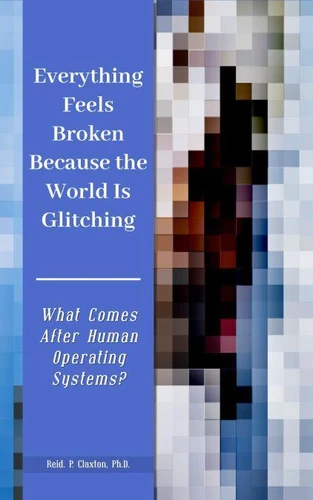
Everything Feels Broken Because the World Is Glitching-What Comes After Human Operating Systems?
Par :Formats :
Disponible dans votre compte client Decitre ou Furet du Nord dès validation de votre commande. Le format ePub est :
- Compatible avec une lecture sur My Vivlio (smartphone, tablette, ordinateur)
- Compatible avec une lecture sur liseuses Vivlio
- Pour les liseuses autres que Vivlio, vous devez utiliser le logiciel Adobe Digital Edition. Non compatible avec la lecture sur les liseuses Kindle, Remarkable et Sony
 , qui est-ce ?
Notre partenaire de plateforme de lecture numérique où vous retrouverez l'ensemble de vos ebooks gratuitement
Pour en savoir plus sur nos ebooks, consultez notre aide en ligne ici
C'est si simple ! Lisez votre ebook avec l'app Vivlio sur votre tablette, mobile ou ordinateur :

- FormatePub
- ISBN978-1-972456-03-3
- EAN9781972456033
- Date de parution07/03/2026
- Protection num.pas de protection
- Infos supplémentairesepub
- ÉditeurReid P. Claxton, Ph.D.
Résumé
The operating system that once structured human life is failing. Institutions no longer coordinate, narratives no longer cohere, and the world no longer behaves according to the rules that governed the last century. What looks like chaos is the predictable breakdown of a system that has reached its limits. This book explains the transition. It shows why the old architecture is collapsing, how the new one is forming, and what it means to live in the overlap between them.
It reveals the mechanics behind institutional failure, the rise of automated coordination, and the return of human-scale meaning. You will learn: Why the world feels unstable even when nothing "big" is happening How glitches signal structural limits rather than temporary crises Why prediction fails in nonlinear environments How to rebuild control when the system can no longer provide it Why meaning is decentralizing and returning to competence, community, and alignment What life looks like after the operating system that shaped the modern world goes offline This is not a book about collapse.
It is a book about navigation - how to remain stable while the environment reorganizes itself, how to build coherence without institutional scripts, and how to operate in a world where the human role is shifting from administration to judgment. The old operating system is ending. What comes next is not a new version of the past. It is a different category of world - one that requires a new form of clarity, a new form of control, and a new form of meaning.
If you want to understand the transition rather than be overwhelmed by it, this book is the map.
It reveals the mechanics behind institutional failure, the rise of automated coordination, and the return of human-scale meaning. You will learn: Why the world feels unstable even when nothing "big" is happening How glitches signal structural limits rather than temporary crises Why prediction fails in nonlinear environments How to rebuild control when the system can no longer provide it Why meaning is decentralizing and returning to competence, community, and alignment What life looks like after the operating system that shaped the modern world goes offline This is not a book about collapse.
It is a book about navigation - how to remain stable while the environment reorganizes itself, how to build coherence without institutional scripts, and how to operate in a world where the human role is shifting from administration to judgment. The old operating system is ending. What comes next is not a new version of the past. It is a different category of world - one that requires a new form of clarity, a new form of control, and a new form of meaning.
If you want to understand the transition rather than be overwhelmed by it, this book is the map.