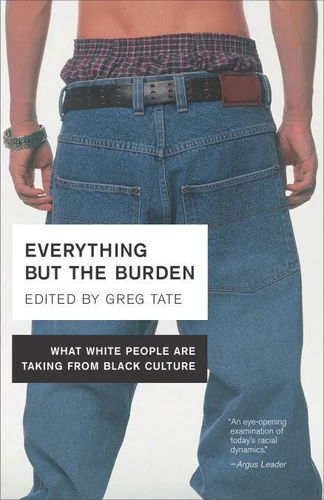
Everything But the Burden. What White People Are Taking from Black Culture
Par :Formats :
Disponible dans votre compte client Decitre ou Furet du Nord dès validation de votre commande. Le format ePub protégé est :
- Compatible avec une lecture sur My Vivlio (smartphone, tablette, ordinateur)
- Compatible avec une lecture sur liseuses Vivlio
- Pour les liseuses autres que Vivlio, vous devez utiliser le logiciel Adobe Digital Edition. Non compatible avec la lecture sur les liseuses Kindle, Remarkable et Sony
- Non compatible avec un achat hors France métropolitaine
 , qui est-ce ?
Notre partenaire de plateforme de lecture numérique où vous retrouverez l'ensemble de vos ebooks gratuitement
Pour en savoir plus sur nos ebooks, consultez notre aide en ligne ici
C'est si simple ! Lisez votre ebook avec l'app Vivlio sur votre tablette, mobile ou ordinateur :

- Nombre de pages272
- FormatePub
- ISBN0-7679-1126-1
- EAN9780767911269
- Date de parution14/01/2003
- Protection num.Adobe DRM
- Taille345 Ko
- Infos supplémentairesepub
- ÉditeurCrown
Résumé
White kids from the 'burbs are throwing up gang signs. The 2001 Grammy winner for best rap artist was as white as rice. And blond-haired sorority sisters are sporting FUBU gear. What is going on in American culture that's giving our nation a racial-identity crisis?Following the trail blazed by Norman Mailer's controversial essay "The White Negro, " Everything but the Burden brings together voices from music, popular culture, the literary world, and the media speaking about how from Brooklyn to the Badlands white people are co-opting black styles of music, dance, dress, and slang.
In this collection, the essayists examine how whites seem to be taking on, as editor Greg Tate's mother used to tell him, "everything but the burden"-from fetishizing black athletes to spinning the ghetto lifestyle into a glamorous commodity. Is this a way of shaking off the fear of the unknown? A flattering indicator of appreciation? Or is it a more complicated cultural exchange? The pieces in Everything but the Burden explore the line between hero-worship and paternalism.
Among the book's twelve essays are Vernon Reid's "Steely Dan Understood as the Apotheosis of 'The White Negro, '" Carl Hancock Rux's "The Beats: America's First 'Wiggas, '" and Greg Tate's own introductory essay "Nigs 'R Us."Other contributors include: Hilton Als, Beth Coleman, Tony Green, Robin Kelley, Arthur Jafa, Gary Dauphin, Michaela Angela Davis, dream hampton, and Manthia diAwara.
In this collection, the essayists examine how whites seem to be taking on, as editor Greg Tate's mother used to tell him, "everything but the burden"-from fetishizing black athletes to spinning the ghetto lifestyle into a glamorous commodity. Is this a way of shaking off the fear of the unknown? A flattering indicator of appreciation? Or is it a more complicated cultural exchange? The pieces in Everything but the Burden explore the line between hero-worship and paternalism.
Among the book's twelve essays are Vernon Reid's "Steely Dan Understood as the Apotheosis of 'The White Negro, '" Carl Hancock Rux's "The Beats: America's First 'Wiggas, '" and Greg Tate's own introductory essay "Nigs 'R Us."Other contributors include: Hilton Als, Beth Coleman, Tony Green, Robin Kelley, Arthur Jafa, Gary Dauphin, Michaela Angela Davis, dream hampton, and Manthia diAwara.
A propos de Greg Tate


Street Portraits
Grand Format
45,00 €