SOLDES
Jusqu'à -70% sur une sélection d'articles*

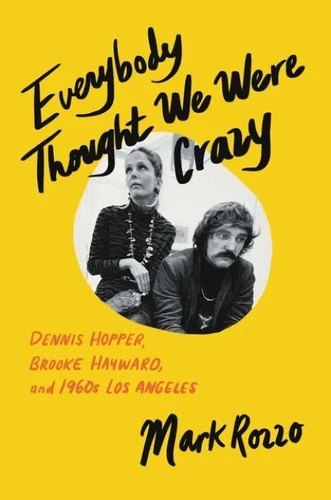
Everybody Thought We Were Crazy. Dennis Hopper, Brooke Hayward, and 1960s Los Angeles
Par :Formats :
Disponible dans votre compte client Decitre ou Furet du Nord dès validation de votre commande. Le format ePub protégé est :
- Compatible avec une lecture sur My Vivlio (smartphone, tablette, ordinateur)
- Compatible avec une lecture sur liseuses Vivlio
- Pour les liseuses autres que Vivlio, vous devez utiliser le logiciel Adobe Digital Edition. Non compatible avec la lecture sur les liseuses Kindle, Remarkable et Sony
- Non compatible avec un achat hors France métropolitaine
 , qui est-ce ?
Notre partenaire de plateforme de lecture numérique où vous retrouverez l'ensemble de vos ebooks gratuitement
Pour en savoir plus sur nos ebooks, consultez notre aide en ligne ici
C'est si simple ! Lisez votre ebook avec l'app Vivlio sur votre tablette, mobile ou ordinateur :

- Nombre de pages272
- FormatePub
- ISBN978-0-06-293999-9
- EAN9780062939999
- Date de parution03/05/2022
- Protection num.Adobe DRM
- Infos supplémentairesepub
- ÉditeurEcco
Résumé
National Bestseller"A landmark and long-overdue cultural history." -VogueThe stylish, wild story of the marriage of Dennis Hopper and Brooke Hayward-a tale of love, art, Hollywood, and heartbreak "Those years in the sixties when I was married to Dennis were the most wonderful and awful of my life." -Brooke HaywardLos Angeles in the 1960s: riots in Watts and on the Sunset Strip, wild weekends in Malibu, late nights at The Daisy discotheque, openings at the Ferus Gallery, and the convergence of pop art, rock and roll, and the New Hollywood.
At the center of it all, one inspired, improbable, and highly combustible couple-Dennis Hopper and Brooke Hayward-lived out the emblematic love story of '60s L. A. The home these two glamorous young actors created for themselves and their family at 1712 North Crescent Heights Boulevard in the Hollywood Hills became the era's unofficial living room, a kaleidoscopic realm-"furnished like an amusement park, " Andy Warhol said-that made an impact on anyone who ever stepped into it.
Hopper and Hayward, vanguard collectors of contemporary art, packed the place with pop masterpieces by the likes of Roy Lichtenstein, Ed Ruscha, and Warhol, and welcomed a who's who of visitors, from Jane Fonda to Jasper Johns, Joan Didion to Tina Turner, Hells Angels to Black Panthers. In this house, everything that defined the 1960s went down: the fun, the decadence, the radical politics, and, ultimately, the danger and instability that Hopper explored in the project that made his career, became the cinematic symbol of the period, and blew their union apart-Easy Rider.
Everybody Thought We Were Crazy is at once a fascinating account of the Hopper and Hayward union and a deeply researched, panoramic cultural history. It's the intimate saga of one couple whose own rise and fall-from youthful creative flowering to disorder and chaos-mirrors the very shape of the decade.
At the center of it all, one inspired, improbable, and highly combustible couple-Dennis Hopper and Brooke Hayward-lived out the emblematic love story of '60s L. A. The home these two glamorous young actors created for themselves and their family at 1712 North Crescent Heights Boulevard in the Hollywood Hills became the era's unofficial living room, a kaleidoscopic realm-"furnished like an amusement park, " Andy Warhol said-that made an impact on anyone who ever stepped into it.
Hopper and Hayward, vanguard collectors of contemporary art, packed the place with pop masterpieces by the likes of Roy Lichtenstein, Ed Ruscha, and Warhol, and welcomed a who's who of visitors, from Jane Fonda to Jasper Johns, Joan Didion to Tina Turner, Hells Angels to Black Panthers. In this house, everything that defined the 1960s went down: the fun, the decadence, the radical politics, and, ultimately, the danger and instability that Hopper explored in the project that made his career, became the cinematic symbol of the period, and blew their union apart-Easy Rider.
Everybody Thought We Were Crazy is at once a fascinating account of the Hopper and Hayward union and a deeply researched, panoramic cultural history. It's the intimate saga of one couple whose own rise and fall-from youthful creative flowering to disorder and chaos-mirrors the very shape of the decade.