Nouveauté
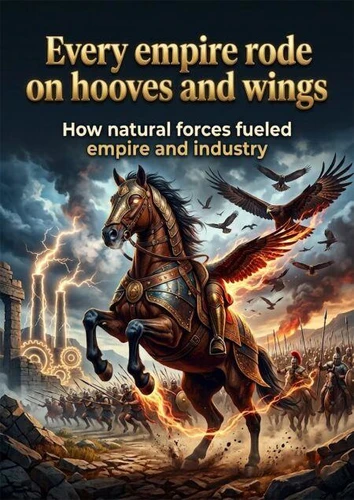
Every empire rode on hooves and wings. How natural forces fueled empire and industry
Par :Formats :
Disponible dans votre compte client Decitre ou Furet du Nord dès validation de votre commande. Le format ePub est :
- Compatible avec une lecture sur My Vivlio (smartphone, tablette, ordinateur)
- Compatible avec une lecture sur liseuses Vivlio
- Pour les liseuses autres que Vivlio, vous devez utiliser le logiciel Adobe Digital Edition. Non compatible avec la lecture sur les liseuses Kindle, Remarkable et Sony
 , qui est-ce ?
Notre partenaire de plateforme de lecture numérique où vous retrouverez l'ensemble de vos ebooks gratuitement
Pour en savoir plus sur nos ebooks, consultez notre aide en ligne ici
C'est si simple ! Lisez votre ebook avec l'app Vivlio sur votre tablette, mobile ou ordinateur :

- Nombre de pages159
- FormatePub
- ISBN978-3-565-58695-0
- EAN9783565586950
- Date de parution25/07/2026
- Protection num.pas de protection
- Taille1 Mo
- Infos supplémentairesepub
- ÉditeurEmphaloz Publishing House
Résumé
Empires did not rise on ambition alone. They rose on the backs of horses that carried cavalry charges, on the endurance of camels that crossed deserts, on the digestive systems of pigs that turned waste into food for expanding armies. This book examines the biological and logistical foundations of human power, arguing that the capacity to mobilize animals determined which civilizations grew and which collapsed.
The Roman Empire's reach depended on horses for communication and mules for supply trains. The Spanish conquest of the Americas relied on horses for psychological warfare and dogs for tracking. The British Empire's global trade network used horses for urban transport and dogs for herding sheep that fed industrial populations. Each chapter explores a different historical context, from ancient Mesopotamia to nineteenth-century railway construction, showing how animal labor, waste, and diseases shaped the trajectory of human societies.
The book also considers the hidden costs: the spread of zoonotic diseases, the ecological transformation of landscapes, and the moral compromises embedded in using sentient beings as tools. It concludes that understanding civilization requires acknowledging the biological infrastructure that made power possible.
The Roman Empire's reach depended on horses for communication and mules for supply trains. The Spanish conquest of the Americas relied on horses for psychological warfare and dogs for tracking. The British Empire's global trade network used horses for urban transport and dogs for herding sheep that fed industrial populations. Each chapter explores a different historical context, from ancient Mesopotamia to nineteenth-century railway construction, showing how animal labor, waste, and diseases shaped the trajectory of human societies.
The book also considers the hidden costs: the spread of zoonotic diseases, the ecological transformation of landscapes, and the moral compromises embedded in using sentient beings as tools. It concludes that understanding civilization requires acknowledging the biological infrastructure that made power possible.
A propos de Elijah Morgan

9,99 €