SOLDES
Jusqu'à -70% sur une sélection d'articles*

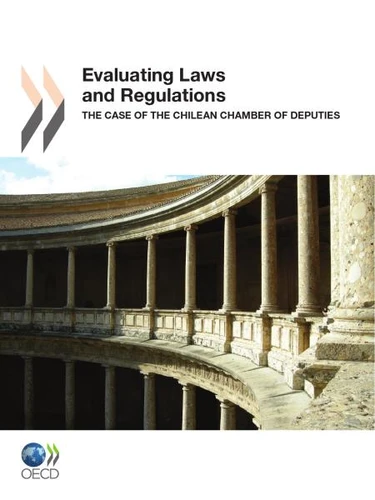
Evaluating laws and regulations (anglais) - the case of the chilean chamber of deputies
Par :Formats :
Disponible dans votre compte client Decitre ou Furet du Nord dès validation de votre commande. Le format PDF est :
- Compatible avec une lecture sur My Vivlio (smartphone, tablette, ordinateur)
- Compatible avec une lecture sur liseuses Vivlio
- Pour les liseuses autres que Vivlio, vous devez utiliser le logiciel Adobe Digital Edition. Non compatible avec la lecture sur les liseuses Kindle, Remarkable et Sony
 , qui est-ce ?
Notre partenaire de plateforme de lecture numérique où vous retrouverez l'ensemble de vos ebooks gratuitement
Pour en savoir plus sur nos ebooks, consultez notre aide en ligne ici
C'est si simple ! Lisez votre ebook avec l'app Vivlio sur votre tablette, mobile ou ordinateur :

- Nombre de pages100
- FormatPDF
- ISBN978-92-64-17626-3
- EAN9789264176263
- Date de parution16/05/2012
- Protection num.Digital Watermarking
- Taille2 Mo
- Infos supplémentairespdf
- ÉditeurOECD
Résumé
This report focuses on international practices of ex post evaluation, and particularly on the current efforts to conduct ex post evaluation of laws in Chile. It is divided in two main parts. The first part of the report provides information and guidance, examples of practice and references on the subject of ex post evaluation in OECD countries, particularly in the Legislative area. It looks at the different definitions of, and motivations for, undertaking evaluation.
There is no single template for undertaking ex post legislative evaluation. The objectives and methods to be used will depend on factors such as the nature of the law to be evaluated and the parliamentary and governmental context in which the evaluation takes place. In the second part the report evaluates the current system and process of ex post evaluation of laws in Chile. It discusses the efforts made by the recently established Law Evaluation Department in the Chamber of Representatives, in the framework of the law making process of the country.
It revises the current practices in both branches of government, executive and legislative, to conduct ex post evaluation of laws and regulations, as well as the formal and informal mechanisms to prepare laws and regulations and their possible ex post review. The paper revises as well the current programme for law evaluation launched by the Chamber of Representatives and it analyses its main components, in particular methodological approaches and inclusion of citizens' perceptions as a tool to increase transparency.
The report concludes with an assessment of the main challenges that the law evaluation work is facing in Chile and makes some recommendations related to institutional, methodological and governance issues.
There is no single template for undertaking ex post legislative evaluation. The objectives and methods to be used will depend on factors such as the nature of the law to be evaluated and the parliamentary and governmental context in which the evaluation takes place. In the second part the report evaluates the current system and process of ex post evaluation of laws in Chile. It discusses the efforts made by the recently established Law Evaluation Department in the Chamber of Representatives, in the framework of the law making process of the country.
It revises the current practices in both branches of government, executive and legislative, to conduct ex post evaluation of laws and regulations, as well as the formal and informal mechanisms to prepare laws and regulations and their possible ex post review. The paper revises as well the current programme for law evaluation launched by the Chamber of Representatives and it analyses its main components, in particular methodological approaches and inclusion of citizens' perceptions as a tool to increase transparency.
The report concludes with an assessment of the main challenges that the law evaluation work is facing in Chile and makes some recommendations related to institutional, methodological and governance issues.