
Nouveauté
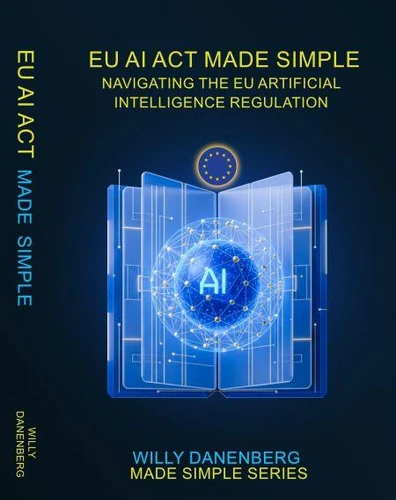
EU AI ACT Made Simple. Made Simple
Par :Formats :
Disponible dans votre compte client Decitre ou Furet du Nord dès validation de votre commande. Le format ePub est :
- Compatible avec une lecture sur My Vivlio (smartphone, tablette, ordinateur)
- Compatible avec une lecture sur liseuses Vivlio
- Pour les liseuses autres que Vivlio, vous devez utiliser le logiciel Adobe Digital Edition. Non compatible avec la lecture sur les liseuses Kindle, Remarkable et Sony
 , qui est-ce ?
Notre partenaire de plateforme de lecture numérique où vous retrouverez l'ensemble de vos ebooks gratuitement
Pour en savoir plus sur nos ebooks, consultez notre aide en ligne ici
C'est si simple ! Lisez votre ebook avec l'app Vivlio sur votre tablette, mobile ou ordinateur :

- FormatePub
- ISBN8903335169
- EAN9798903335169
- Date de parution08/07/2026
- Protection num.pas de protection
- Infos supplémentairesepub
- ÉditeurŞEHRAZAT YAZICI
Résumé
Artificial intelligence now shapes decisions that affect people's lives, rights, and opportunities. With the EU AI Act, Europe has set clear expectations: AI must be accountable, governed, and human-centric. Yet for many organizations, the regulation feels complex and difficult to apply. EU AI Act Made Simple explains the regulation in a way that connects legal intent with real-world AI use. This book translates the EU AI Act into practical understanding for executives, legal and compliance teams, developers, DevOps engineers, cybersecurity professionals, and auditors.
It shows how AI governance fits with GDPR, NIS2, DORA, ISO 27001, and cybersecurity practices, replacing checkbox compliance with risk-based, defensible decision-making. Written by a senior practitioner from regulated environments, EU AI Act Made Simple is for organizations that want clarity, not shortcuts. If you are responsible for AI systems, AI risk, or AI governance, this book will help you move from uncertainty to control - and from compliance to maturity.
This book provides a practical guide to implementing end-to-end cryptographic governance aligned with DORA, NIS2 and ISO 27001. It explains how to automate renewals, enforce revocation, manage secrets and generate audit-ready evidence. What Readers Say"This book succeeds where most regulatory publications fail. It explains the EU AI Act without diluting its seriousness or overwhelming the reader with legal abstraction.
I finished it with a clear mental model of the regulation and, more importantly, a sense of how to act on it inside a real organization.""What impressed me most is how the author translates legal intent into operational reality. The book does not treat compliance as paperwork, but as governance, design, and responsibility. It is rare to find a work that speaks equally well to executives, legal teams, and engineers.""After reading this book, the EU AI Act no longer felt like an external threat hanging over innovation.
It felt like a framework that could be integrated into how we already think about risk, quality, and accountability. That shift alone makes this book invaluable.""This is not a simplified summary of the regulation. It is a structured explanation of why the regulation exists and how it fits into the broader landscape of AI, cybersecurity, and data protection. The depth is reassuring rather than intimidating.""What sets this book apart is its realism.
It clearly understands how organizations actually function, including the friction between teams, the pressure to deliver, and the tendency to postpone governance. The guidance feels credible because it acknowledges these realities instead of ignoring them.""I appreciated that the book does not rely on checklists or superficial frameworks. Instead, it builds understanding progressively. By the time I reached the later chapters, earlier concepts had naturally fallen into place.""This book finally bridges the gap between AI theory and regulatory practice.
It explains not only what the EU AI Act requires, but why certain obligations exist and how they relate to real-world harm and accountability."
It shows how AI governance fits with GDPR, NIS2, DORA, ISO 27001, and cybersecurity practices, replacing checkbox compliance with risk-based, defensible decision-making. Written by a senior practitioner from regulated environments, EU AI Act Made Simple is for organizations that want clarity, not shortcuts. If you are responsible for AI systems, AI risk, or AI governance, this book will help you move from uncertainty to control - and from compliance to maturity.
This book provides a practical guide to implementing end-to-end cryptographic governance aligned with DORA, NIS2 and ISO 27001. It explains how to automate renewals, enforce revocation, manage secrets and generate audit-ready evidence. What Readers Say"This book succeeds where most regulatory publications fail. It explains the EU AI Act without diluting its seriousness or overwhelming the reader with legal abstraction.
I finished it with a clear mental model of the regulation and, more importantly, a sense of how to act on it inside a real organization.""What impressed me most is how the author translates legal intent into operational reality. The book does not treat compliance as paperwork, but as governance, design, and responsibility. It is rare to find a work that speaks equally well to executives, legal teams, and engineers.""After reading this book, the EU AI Act no longer felt like an external threat hanging over innovation.
It felt like a framework that could be integrated into how we already think about risk, quality, and accountability. That shift alone makes this book invaluable.""This is not a simplified summary of the regulation. It is a structured explanation of why the regulation exists and how it fits into the broader landscape of AI, cybersecurity, and data protection. The depth is reassuring rather than intimidating.""What sets this book apart is its realism.
It clearly understands how organizations actually function, including the friction between teams, the pressure to deliver, and the tendency to postpone governance. The guidance feels credible because it acknowledges these realities instead of ignoring them.""I appreciated that the book does not rely on checklists or superficial frameworks. Instead, it builds understanding progressively. By the time I reached the later chapters, earlier concepts had naturally fallen into place.""This book finally bridges the gap between AI theory and regulatory practice.
It explains not only what the EU AI Act requires, but why certain obligations exist and how they relate to real-world harm and accountability."
A propos de Willy Danenenberg


11,49 €


11,49 €

11,49 €


11,49 €

11,49 €

11,49 €


11,49 €
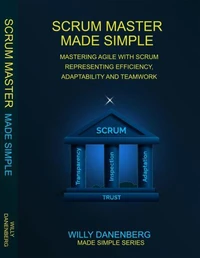
Scrum Master Made Simple
E-book
11,49 €
11,49 €

11,49 €


11,49 €