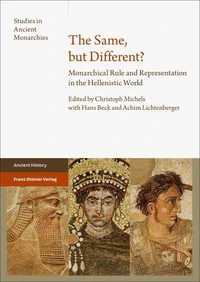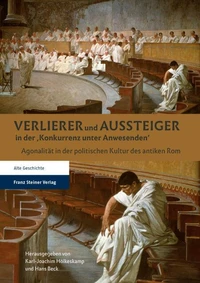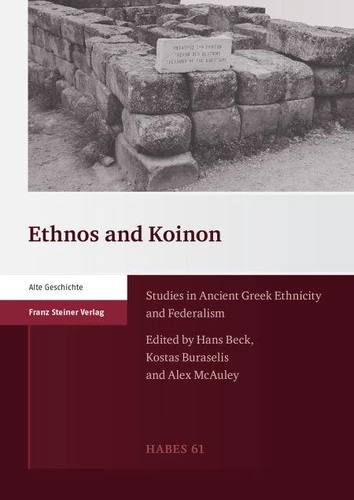



Hans Beck is Professor of Ancient History at the University of Münster and Adjunct Professor in Classical Studies at McGill University Montreal. His research focuses on the local horizon of ancient Greece and its interplay with the grand currents of cultural patterns and practices. He has been awarded the Anneliese Maier Prize of the Humboldt Foundation and is a Fellow of the Royal Society of Canada.
Kostas Buraselis is Professor of Ancient History and Vice Principal of Academic Affairs and International Relations at the University of Athens, Greece.
His main scholarly interests are the political and institutional history of the Hellenistic world and the Roman imperial period in the Greek East, ancient ruler cult, and modern historiography on the ancient world. Alex McAuley in Lecturer in Hellenistic History at Cardiff University, Wales. In addition to his work on Greek federalism and political culture, he has also published on the cities of the Greek mainland as well as the ideology and political practice of the Hellenistic dynasties.
His main scholarly interests are the political and institutional history of the Hellenistic world and the Roman imperial period in the Greek East, ancient ruler cult, and modern historiography on the ancient world. Alex McAuley in Lecturer in Hellenistic History at Cardiff University, Wales. In addition to his work on Greek federalism and political culture, he has also published on the cities of the Greek mainland as well as the ideology and political practice of the Hellenistic dynasties.