SOLDES
Jusqu'à -70% sur une sélection d'articles*

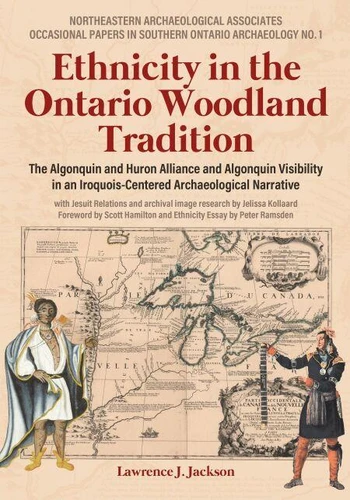
Ethnicity in the Ontario Woodland Tradition: The Algonquin and Huron Alliance and Algonquin Visibility in an Iroquois-Centered Archaeological Narrative
Par :Formats :
Disponible dans votre compte client Decitre ou Furet du Nord dès validation de votre commande. Le format ePub est :
- Compatible avec une lecture sur My Vivlio (smartphone, tablette, ordinateur)
- Compatible avec une lecture sur liseuses Vivlio
- Pour les liseuses autres que Vivlio, vous devez utiliser le logiciel Adobe Digital Edition. Non compatible avec la lecture sur les liseuses Kindle, Remarkable et Sony
 , qui est-ce ?
Notre partenaire de plateforme de lecture numérique où vous retrouverez l'ensemble de vos ebooks gratuitement
Pour en savoir plus sur nos ebooks, consultez notre aide en ligne ici
C'est si simple ! Lisez votre ebook avec l'app Vivlio sur votre tablette, mobile ou ordinateur :

- FormatePub
- ISBN978-1-77962-392-8
- EAN9781779623928
- Date de parution28/09/2024
- Protection num.pas de protection
- Infos supplémentairesepub
- ÉditeurTellwellPublishing
Résumé
This book examines Ontario woodland tradition archaeology in the context of archaeological statements of ethnicity and their reliability in the interpretation of the archaeological record. It focuses on Southern Ontario circa 1300 to 1650 A. D., the time of the Algonquin and Huron Alliance (Sioui and Labelle 2014). Evidence is provided for a highly interactive multicultural landscape, briefly viewed by Europeans, in which Algonquian-speaking peoples did not disappear with the rise and spread of Iroquoian village life.
Instead, they were part of a regionally unique ethnogenesis, at different times and places, with Iroquoians. This study also reveals how colonial attitudes in the structuring of academic research can lead to erasure of parts of Indigenous history. It urges more attention be paid to reconciling Indigenous oral tradition with archaeological science to reach a truer understanding of how past peoples lived and thought of themselves.
Instead, they were part of a regionally unique ethnogenesis, at different times and places, with Iroquoians. This study also reveals how colonial attitudes in the structuring of academic research can lead to erasure of parts of Indigenous history. It urges more attention be paid to reconciling Indigenous oral tradition with archaeological science to reach a truer understanding of how past peoples lived and thought of themselves.